

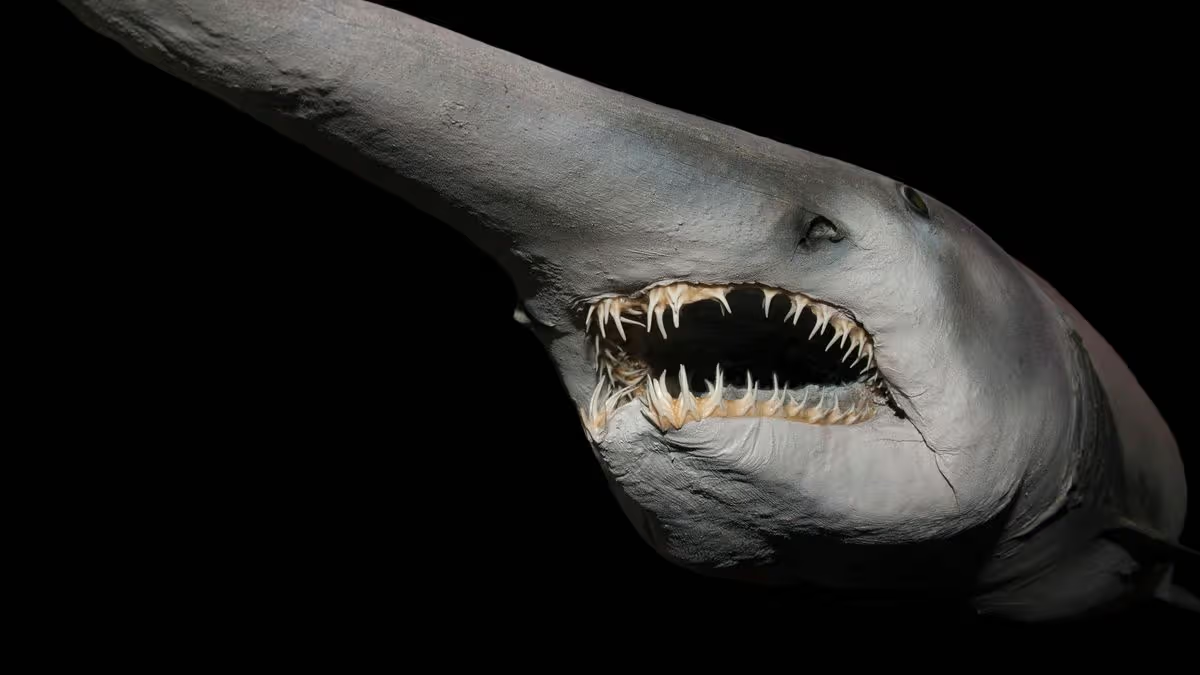
Scientists have filmed a living goblin shark for the first time ever, capturing the 125-million-year-old ‘living fossil’ deep in the Pacific Ocean
Scientists have captured breathtaking footage of one of the ocean’s most bizarre residents – a creature so grotesque it looks like it swam straight out of a sci-fi nightmare. The legendary goblin shark, infamous for its massive snout and terrifying, extendable jaw, has finally been caught on camera alive in its natural deep-sea habitat for the first time.
Eerie clips show the prehistoric beast gliding effortlessly through the pitch-black waters, led by its strange nose. Fish expert Professor Culum Brown, from Macquarie University, didn’t hold back when describing the creature’s unique appearance, noting that goblin sharks are “like something out of a horror movie.”
He said: “They are ridiculously horrendous to look at. Not even their mother would love their faces.” The professor added that the deep-sea dweller is “arguably the ugliest shark on the planet.”
The ancient family of sharks has survived virtually unchanged for 125 million years, meaning they were roaming the oceans back when the very first flowers were blooming on Earth. Because they live at such extreme depths, barely anyone has ever seen a goblin shark in person, let alone a living one.
The shark’s signature feature is its nightmare-inducing mouth. Professor Brown explained that they have “really weird long noses” alongside a flexible jaw that “can shoot forward” to snare passing meals. The oversized nose is packed with special sensory cells that detect the tiny electrical pulses given off by other sea creatures in the dark.
When it’s time to eat, the shark’s mouth explodes forward, stretching out as far as the tip of its snout. Professor Alan Jamieson, director of the Minderoo-UWA Deep-Sea Research Centre, explained that the beast “does a kind of slingshot feeding thing” to snap up its prey.
Until now, the multi-million-year-old species had only ever been spotted when accidentally dragged to the surface by fishing nets. But Australian researchers changed history by filming the creature in the Tonga Trench – the second deepest trench on Earth.
Capturing the incredible 20-second clip was no easy feat, requiring more than 50 days of continuous underwater filming. The footage also set a record for the deepest-known sighting of the species, taking place 1,997 metres beneath the surface in total darkness and freezing temperatures.
The spectacular video, combined with an earlier 2019 sighting near Jarvis Island, forms the basis of a brand-new 2026 study published in the Journal of Fish Biology. Professor Jamieson, who co-authored the study, admitted the elusive animal has taken on an almost mythical status because it is so rarely encountered. Despite growing up to a whopping seven metres long, they don’t rush around.
Professor Brown added: “Like many deep sea creatures, they probably have a really slow metabolism and probably wander around at a very slow pace.” By taking things slow in the deep ocean, this ultimate “living fossil” has managed to outlive the dinosaurs.
By staronline@reachplc.com (Liam Randall)
Source link