

Have you ever looked at an argument and thought: “I’m staying well out of that?” So did President Woodrow Wilson, on August 19, 1914, when his Declaration of Neutrality kept the US out of World War One.
But the concept of “we don’t mind either way” has been around for centuries. Here Meg Jorsh casts an indifferent glance at the history of neutrality…
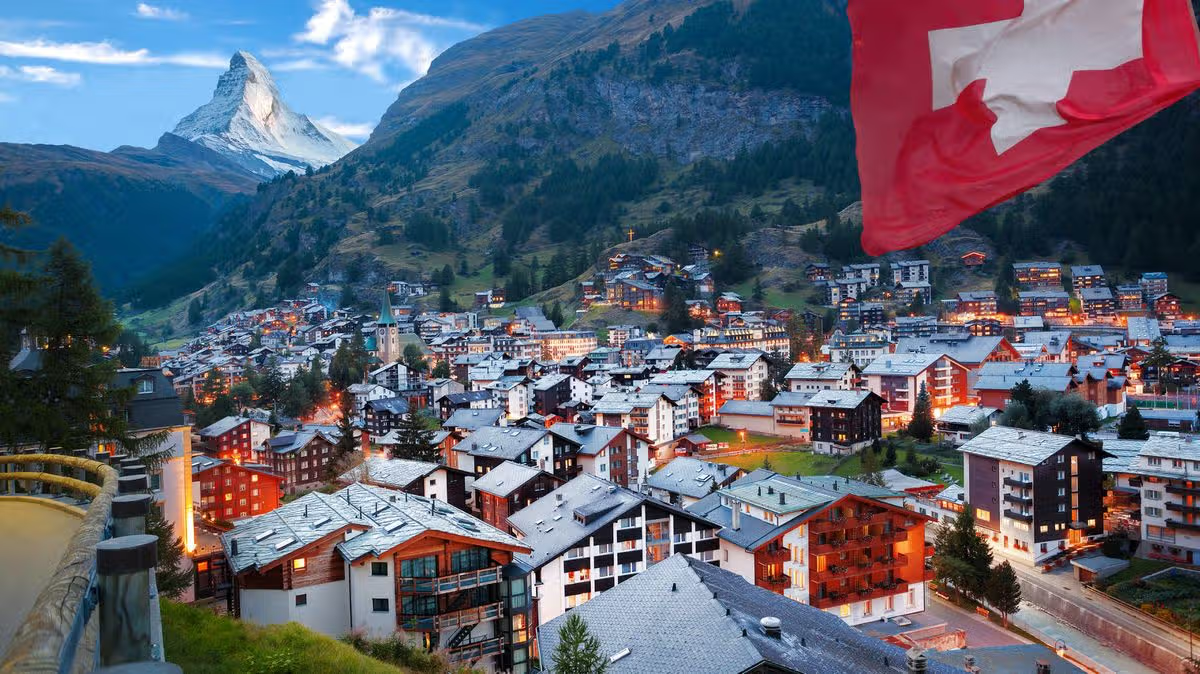
Swiss ease: The oldest example of a permanently neutral state, Switzerland has kept up its “don’t mind” policy since 1815. Historians believe it can be traced back to Medieval times, when the Old Swiss Confederacy suffered heavy defeats trying to conquer its neighbouring kingdoms.
Famously neutral during both World Wars, Switzerland keeps a healthy standing army to make sure it’s left well alone.
Costa living: At the other end of the scale, Costa Rica got rid of its armed forces when it declared neutrality in 1949.
The money it once spent on defence was redirected into infrastructure, health and education – and it still has a 98% literacy rate, one of the highest in Latin America. The decision is celebrated every December 1, known as Army Abolition Day.
Hidden agenda: In theory, Ireland was neutral during World War Two. But it did make secret concessions to the Allies by sharing intelligence and weather reports, and by repatriating downed Royal Air Force airmen.
After the war, it emerged the Nazis had planned to invade the state and use it as a base for attacks on the UK. Ireland has also given Ukraine military aid since 2022.
Don’t want to Russia: Ukraine itself was a proudly neutral state, from the moment it declared independence from the Soviet Union in 1991. But it was forced to drop the policy in 2014, when Russia invaded the Crimean Peninsula, on the country’s southern coast.

Vladimir Putin made Ukraine’s anti-war ambitions impossible(Image: Getty Images)
It has been trying to join NATO, the international peacekeeping body, ever since – especially following Vladimir Putin ’s full-blown invasion in 2022.
Some Finn’s up: Until Russia’s invasion of Ukraine, the Nordic states of Sweden and Finland were neutral. But they have both since joined NATO, in response to fears they could be next on the Russian despot’s shopping list.
If they are attacked, they will now have the full support of all 32 members, including Britain and the US, on top of 340,000 military personnel between them.
Combat fatigue: If any country knows the horrors of conflict, it has to be Japan. The nation faced near-constant battle from the early Middle Ages until its surrender in World War Two.
Following that defeat, which saw 250,000 die in the atomic bombings of Hiroshima and Nagasaki, its constitution was amended to read “the Japanese people forever renounce war.”
By staronline@reachplc.com (Meg Jorsh)
Source link