NEWYou can now listen to Fox News articles!
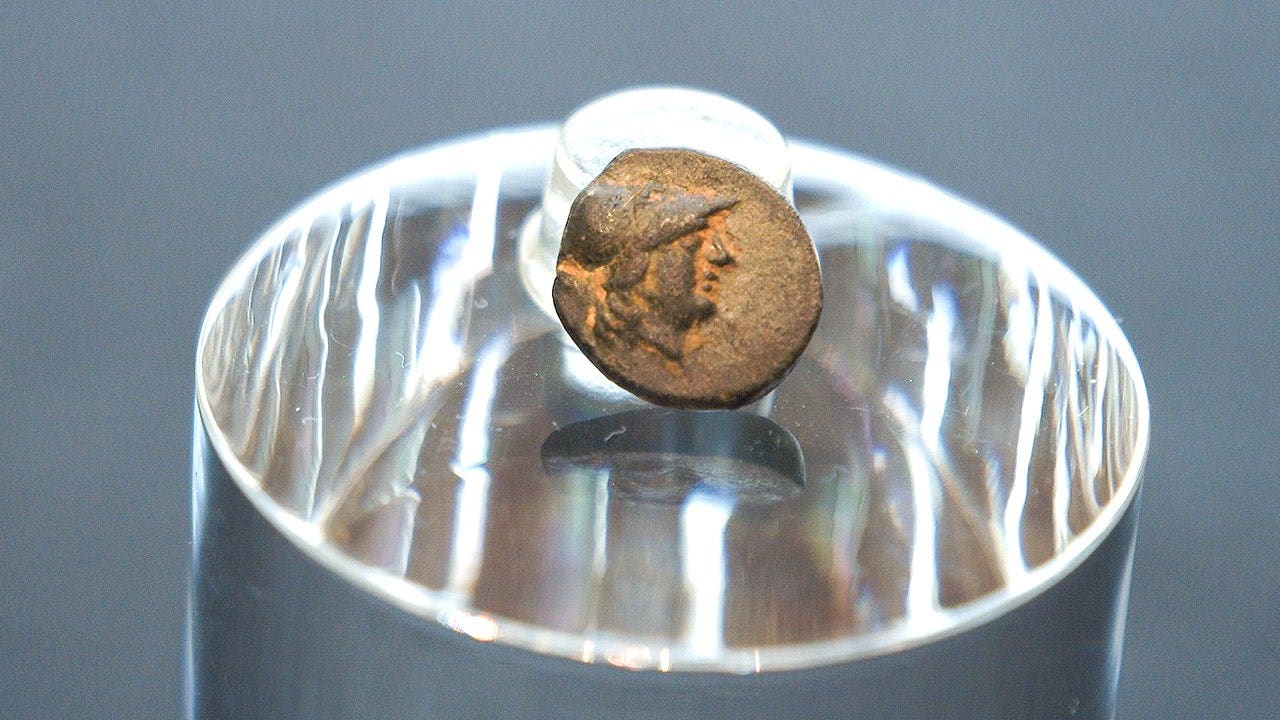
A German teenager recently uncovered an ancient Greek coin — marking the first such find ever recorded in Berlin.

The coin, which dates to the third century B.C., was uncovered by a 13-year-old male student in the district of Spandau, an area not typically associated with ancient Greek artifacts.
PETRI Berlin, an archaeology center in the German capital, announced the find in April.
‘ARCHAEOLOGICAL SENSATION’ DISCOVERED AT ANCIENT ROMAN MILITARY CAMPS
The organization said that finds from classical antiquity “are generally rare in Berlin.”
The release noted, “While Roman objects can be identified occasionally but regularly, Greek finds had previously been entirely absent.”
A rare ancient Greek coin dating to the third century B.C. was discovered in Berlin by a teenage student, marking a first for the German capital. (PETRI Berlin/Christof Hannemann)
It went on, “The current discovery therefore represents a scientific rarity.”
The tiny bronze coin measures just 12 millimeters and weighs 7 grams. Though historically significant, it likely held little monetary value in the ancient world.
It was minted between 281 and 261 B.C. in Troy, the legendary city tied to the Trojan War.
The coin’s front side depicts the head of the goddess Athena wearing a Corinthian helmet, while the reverse shows Athena Ilias, the local Trojan form of Athena, with a woven basket known as a kalathos.
METAL DETECTORIST UNWITTINGLY DISCOVERS STRANGE HOARD OF HUNDREDS OF ANCIENT OBJECTS: ‘RARELY SEEN’
“Initially, it was unclear whether the find came from an archaeological context or was a modern collector’s item that had been lost,” the organization’s release stated.
“There were connections between these ancient peoples, perhaps more than we can imagine today.”
“However, an examination of the site by specialists revealed clear evidence of long-term use of the area as a burial ground. Ceramic fragments, cremated remains and a bronze double button indicate a Bronze Age or early Iron Age cemetery.”
CLICK HERE TO SIGN UP FOR OUR LIFESTYLE NEWSLETTER
The low-value coin was likely left as a grave offering, said Jens Henker, an archaeological heritage officer with the Berlin State Monuments Office.
Henker told Fox News Digital that the boy who found it “was simply out playing in his usual area” before stumbling on the coin by accident.
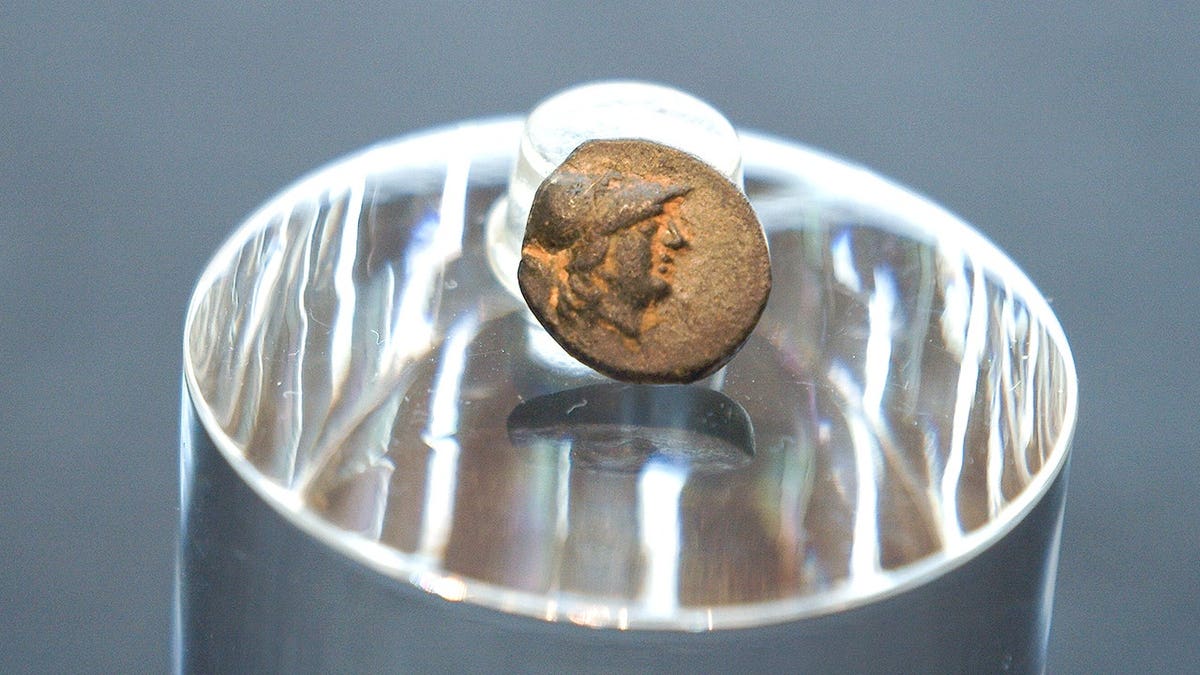
Archaeologists say the bronze coin found in Berlin’s Spandau district likely dates back more than 2,000 years to ancient Troy. (PETRI Berlin/Christof Hannemann)
“Because he is interested in old coins, he probably [had] an eye for that and took it with him … without knowing what he found,” he said.
Henker added that how the coin ultimately made its way to Berlin remains unexplained.
CLICK HERE FOR MORE LIFESTYLE STORIES
“Because we have amber from the Baltic Sea in Ancient Greece, there were clearly trading connections as early as the Bronze Age,” he noted. “The coin could have simply been a traded good.”
There was likely some contact between ancient Greeks and Germanic tribes, but the extent remains unclear.
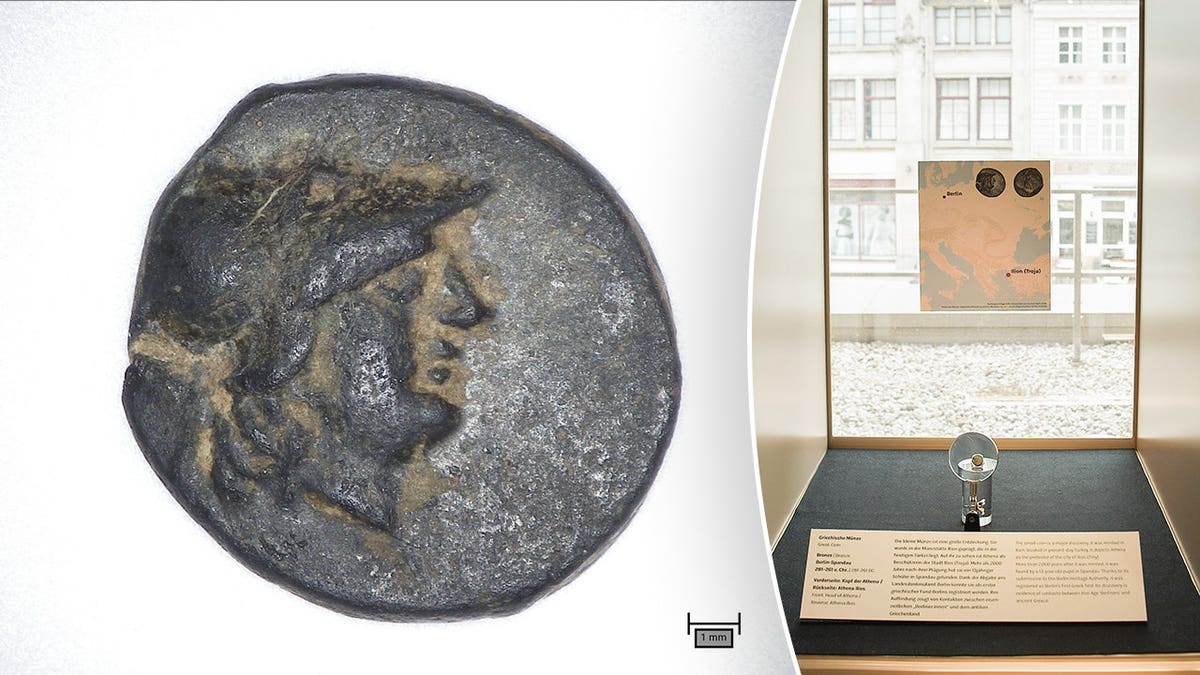
Experts believe the coin may have been left as a grave offering in what appears to be a prehistoric burial site. (Berlin State Museums, Museum of Prehistory and Early History / Ulrike Scheibe | PETRI Berlin / Christof Hannemann)
“Did the coin come not directly from Greece to our area, but via connections with Celtic tribes in the southwest?” Henker mused.
“At the end, we have many guesses and questions, but one thing should be recognized: there were connections between these ancient peoples, perhaps more than we can imagine today.”
CLICK HERE TO DOWNLOAD THE FOX NEWS APP
Greek contact with Germanic tribes was far more limited than the extensive ties seen under the Roman Empire, Henker noted.
“The connections between the Roman Empire and the German tribes was a much more intense one, mainly [because] the members of the German tribes [were] often used as helping troops for the Romans,” he said.
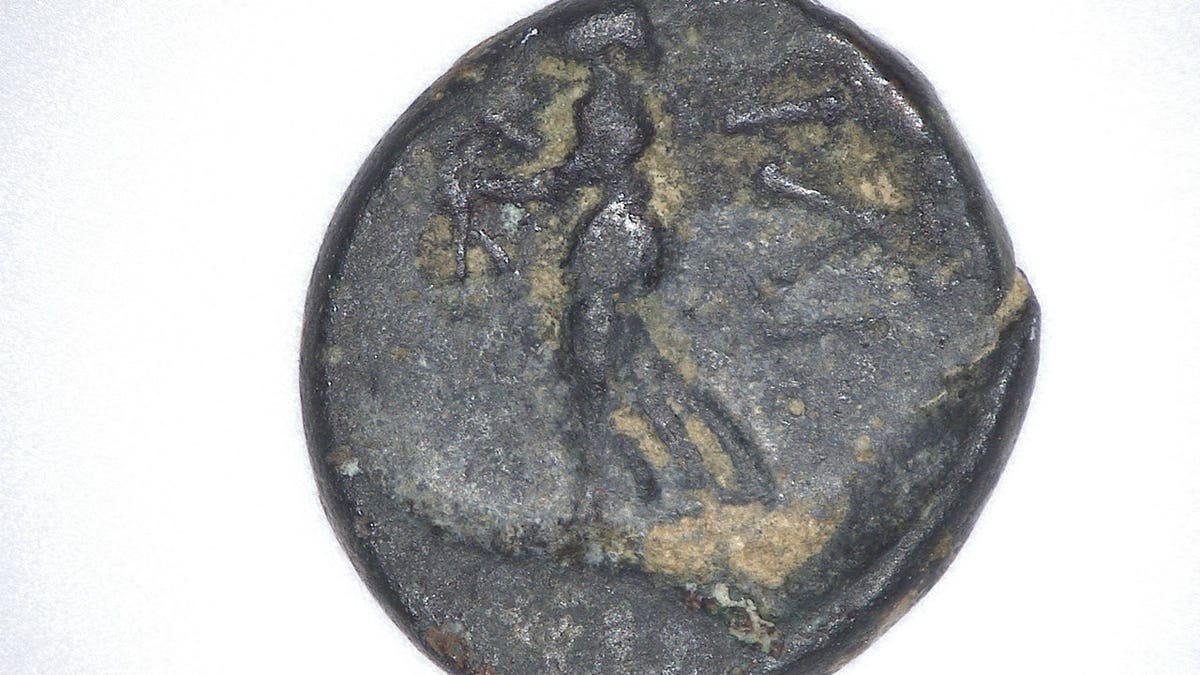
Athena appears prominently on the coin uncovered in Berlin, offering a clear connection to ancient Greek culture. (Berlin State Museums, Museum of Prehistory and Early History / Ulrike Scheibe)
“In return, but also by plundering, a lot of Roman objects came in our area. According to the lesser amount of findings here from the Greek period, the connections were less intensive.”
The official underscored the significance of the find, saying his team “was never expecting such a find, although we wished it!”
TEST YOURSELF WITH OUR LATEST LIFESTYLE QUIZ
He added, “For Berlin, it is the first find, but not for the area of Brandenburg around Berlin.”
“In the time around 1584, a [German] farmer found a tetradrachm [coin] from the island of Thasos, [from] after 146 B.C. … Still, these finds are really rare, but our recently found coin is not the only one.”
By Andrea Margolis
Source link