The opera is based on a short novel by Herman Melville, author of Moby Dick, but the work was unfinished when he died in 1891. The author’s indecipherable handwriting and unintelligible notes led to great problems in completing it and publication was delayed until 1924, but it was the premiere of Britten’s opera in 1951 that gave the story real shape.
Melville’s book told the tale of Billy Budd, an honest and hugely likeable young man press-ganged into the British navy during the Napoleonic wars. Envious of Budd’s popularity and good looks, John Claggart, villainous master-at-arms of the battleship HMS Indomitable, seeks to destroy him with trumped up charges of planning a mutiny.
Claggart and Budd appear before the ship’s captain, the noble Edward Vere, who quickly sees what is going on, but a debilitating stammer prevents Budd from responding to Claggart’s accusations. In desperation and mute fury, Budd strikes out at Claggart and kills him with a single punch, leaving Vere faced with a huge moral dilemma: should Billy Budd be hanged at the yardarm, as specified by naval law for striking a senior officer, or should Claggart’s villainy be exposed and Budd reprieved?
This conflict between duty and conscience was amplified in the creation of the opera by Britten’s collaboration with the novelist EM Forster and librettist Eric Crozier who together breathed a new intensity into Melville’s creation. The aged Captain Vere now book-ends the story, telling of the crushing impact it had on his life. The story provides a wonderful opportunity for Britten to do what he does best: providing powerful music that conveys perfectly the passion, the sounds and emotion of the sea, the weather and war.
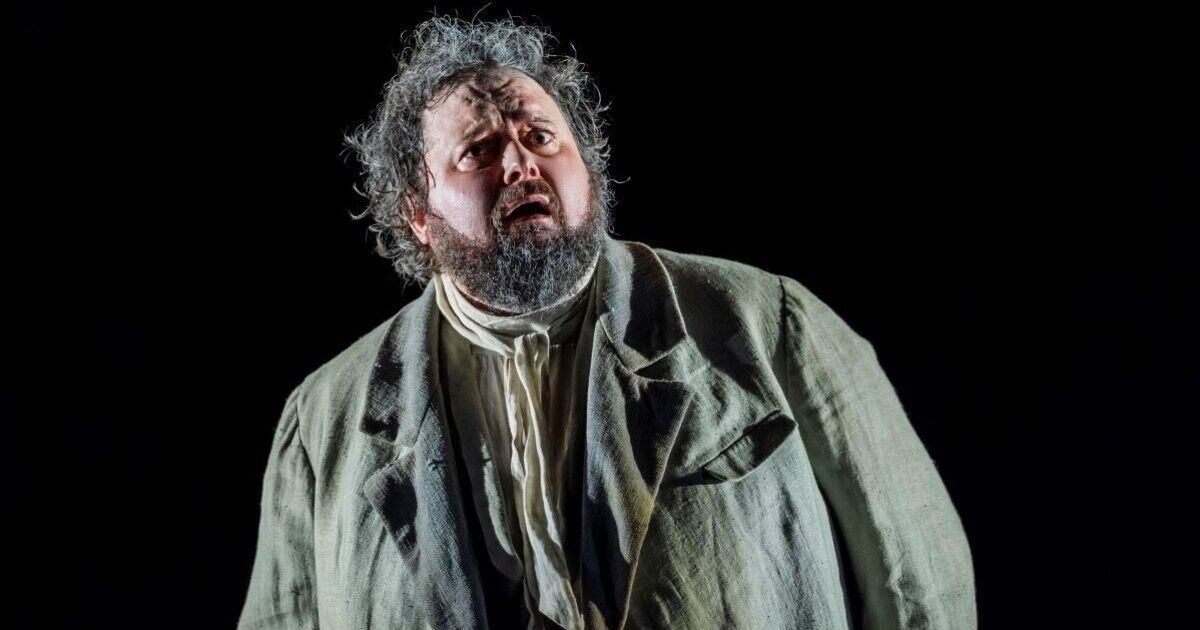
The Glyndebourne production, created by Michael Grandage in 2010, was this time left in the very capable hands of revival director Ian Rutherford and all the main parts were superbly cast and performed. The British baritone Thomas Mole, recently named as one of the world’s most exciting young musicians, gave an impressively mature performance in the title role, capturing the character’s loyalty and passion combined with his stammer-inducing insecurity.
Bass-baritone Sam Carl was gloriously evil as Claggart, his growling low notes bringing out the man’s villainy and his combination of lust and envy for Budd. Best of all was Allan Clayton as Captain Vere, tortured by the moral anguish he faced. Earlier this year, Clayton was superbly impressive as Peter Grimes in Britten’s other greatest opera, and his current performance marks him out as the finest exponent of this composer’s music.
With Christopher Oram’s superb set design brilliantly capturing the claustrophobic feeling of life on a late 18th century warship and the London Philharmonic Orchestra giving a stirring performance under conductor Nicholas Carter, this had all the components needed for a memorable production.
Many great operas – Carmen, La Boheme, La Traviata and Tosca for example – end abruptly with the death of the title character, but Britten and his librettists give the audience time to ponder and digest their feelings after Budd us put to death. The music is impressively slow and sombre, leading perfectly into the aged Vere telling of the disastrous effect these happenings had on his life. This is a glorious performance of a perfect production that lifts Benjamin Britten’s Billy Budd to a place among the finest operas of the 20th century.
By William Hartston
Source link