
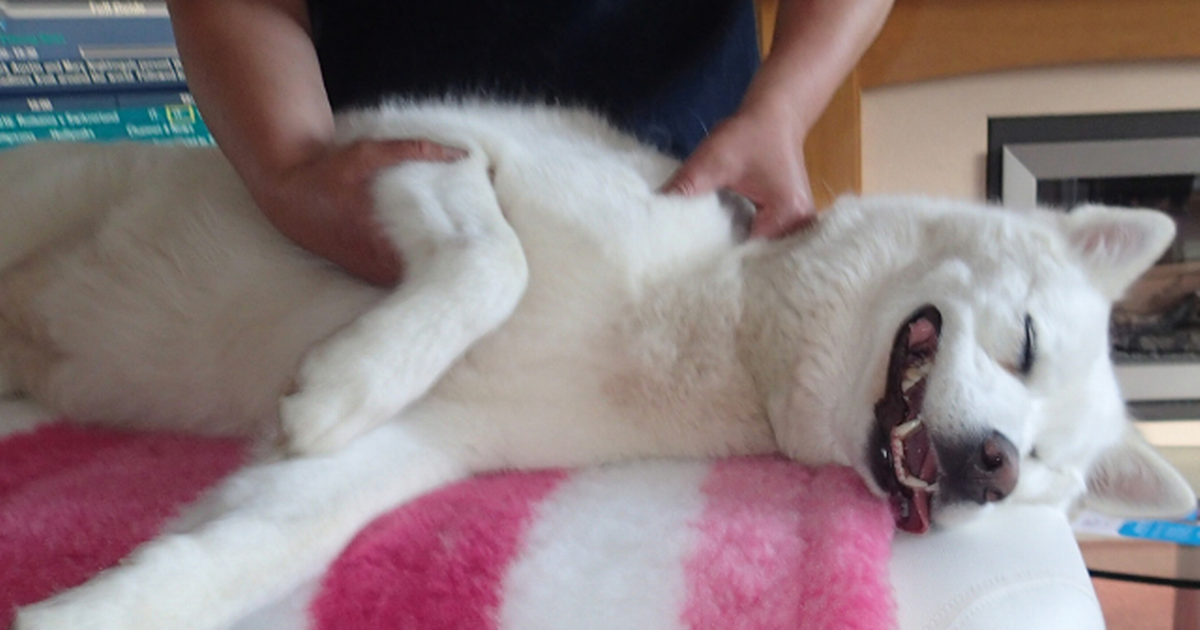
We all love a relaxing massage – so why should our furry friends feel any different? If your pooch needs a rub-down, Star Paws columnist Catherine Lamb is here to help
You might not think the average dog has a lot to feel stressed about. But all those flighty squirrels and unexpected visitors can add up over time, leaving your pooch with creaky joints and muscle knots.
If you’ve got a twitchy terrier or a fretful Frenchie, why not give them a massage? Here’s how to get started…
Show your puppy some love
Dogs experience stress, joint stiffness and muscle tension, just like us. And a calm and relaxing massage can really help.
In fact, massaging your pooch has a number of benefits. It can aid with physical conditions, improve emotional wellbeing and improve circulation and mobility – as well as helping strengthen the bond between dog and owner.

Pooches in pain
Canines are masters at concealing discomfort, so while your pooch may wag their tail and bound outside for a walk, they could still be suffering with muscular pain.
Signs to watch out for include recurring lameness, stiffness after exercise, and reluctance to jump in the car or climb stairs. Withdrawal and loss of interest in play are also signals that something isn’t right.
“Owners put signs of pain down to their dog simply ‘getting older’, when in fact muscular issues such as trigger points, spasms, strains or even scar tissue could be the cause,” explains Angela Day, canine rehabilitation expert.
Ask an expert
If you think your pooch could benefit from a massage, you could book them in with a trained practitioner.
“Dogs have over 700 muscles, and a trained Clinical Canine Massage Practitioner can palpate and assess 60 of them in just five minutes,” Angela says.

Make sure that the therapist you use is registered with the Canine Massage Guild or the International Association of Animal Therapists.
“They must also be accredited by the Canine Massage Therapy Centre, which gives you peace of mind that your therapist is properly trained, insured, and working to professional standards.”
Doggy DIY
There are some simple techniques that you can use at home to massage your pooch. Here are Angela’s top tips…
• Start small. Just three to five minutes is enough. Include it as part of grooming time so it feels natural and enjoyable.
• Pick your moment. Only attempt a massage when your dog is calm and relaxed, not when they’re bouncing off the walls.
• Gentle strokes first. Begin with light fingertip strokes, then slowly brush your palm along their body to warm the tissues and induce calm.
• Focus on big muscles, not joints. Use circular motions on the shoulders, neck and hips, working against the fur. Avoid their bones and joints, and never prod or poke them.
• Watch their body language. If your dog licks their lips, yawns, stiffens or moves away – ease off. Sensitivity, especially around the back end, can signal discomfort and a need for a vet check.
Massage benefits
Massages can help dogs in a number of ways. They may be especially beneficial for:
• Arthritis and joint stiffness
• Hip and elbow dysplasia
• Spinal issues
• Ligament and tendon injuries
• Muscle tension
• Myofascial pain
• Reduced mobility in older dogs
• Post-surgical recovery
• Sports and working dog maintenance
• Stress and anxiety-related behaviours
Helpful products
Here are some product recommendations from Angela to help keep your pooch relaxed and comfortable…
• Supportive mats & beds – Big Dog Bed Company has a range of physiotherapy floor mats and orthopaedic beds to help support pets’ joints.
• Natural calming support – Mellow Pet for Dogs by Nature’s Pet provides natural support for stress and anxiety, and encourages relaxation.
To find out more about canine massage and other essential dog care issues, visit thecanineadvocate.co.uk
By staronline@reachplc.com (Catherine Lamb)
Source link