
NEWYou can now listen to Fox News articles!
Archaeologists recently retrieved early medieval weapons from a lake in Poland — relics believed to be connected to the country’s first rulers.

The Museum of the First Piasts at Lednica announced the discovery in a Facebook post on Nov. 12. The underwater excavation took place at Lake Lednica, in west-central Poland, some 150 miles west of Warsaw.
The lake surrounds Ostrów Lednicki, an island that served as a massive royal stronghold in the late 10th century.
LOST ROYAL PALACE DESTROYED IN BLOODY INVASION RESURFACES IN RIVER, ARCHAEOLOGISTS SAY
Over the years, excavators have found around 280 artifacts in the lake, including 145 axes, 64 spearheads, eight swords and, most recently, four spears.
Researchers from Nicolaus Copernicus University in Toruń, in collaboration with the Museum of the First Piasts at Lednica, found the spears.
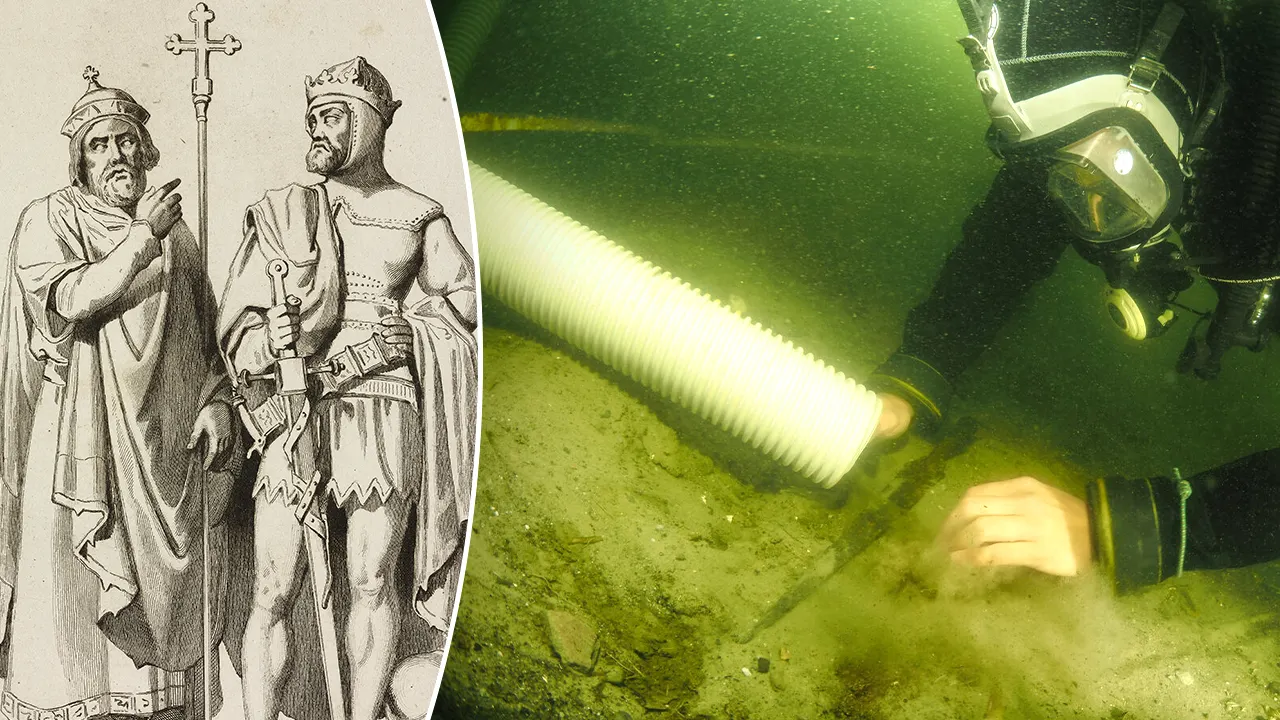
The weapons date to the era of Mieszko I and Bolesław the Brave, pivotal figures in medieval Poland’s rise. (De Agostini via Getty Images; M. Trzciński, Muzeum Pierwszych Piastów na Lednicy via Facebook)
The weapons date back to the time of Mieszko I and Bolesław the Brave, two legendary figures in the formation of medieval Poland.
Speaking to Fox News Digital, museum director Andrzej Kowalczyk said Lake Lednica has “surpris[ed] scientists for decades” — and that the weapons add to the site’s enduring mystery.
“Decorated socketed spearheads are exceptional examples of early medieval weaponry in Northern and Eastern Europe,” he said.
CLICK HERE TO SIGN UP FOR OUR LIFESTYLE NEWSLETTER
“Three similar examples were found in the 1990s in the waters of Lake Lednica. However, no finds so richly adorned — with a socket made entirely of colored metal alloys — had been discovered until now.”
The elaborate decorations on the weapons, as well as the precious metals they were made from, suggest “high-born warrior[s]” could have used them, Kowalczyk said.
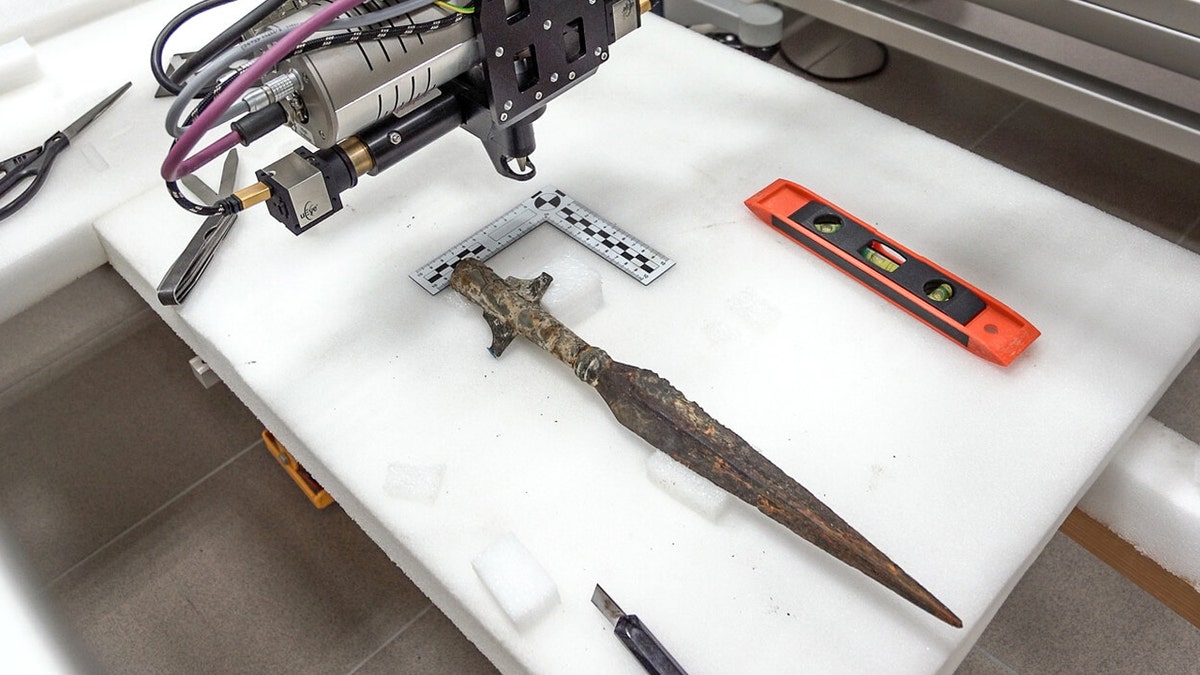
Similar spears were found in the 1990s, but none as richly adorned as those discovered now, said experts. (M. Popek, Muzeum Pierwszych Piastów na Lednicy via Facebook)
The artifacts “add new elements to the largest collection of early medieval weaponry in Europe found at a single archaeological site,” he added.
The most exciting find, Kowalczyk said, was the “princely spear” that was exceptionally well-preserved.
CLICK HERE FOR MORE LIFESTYLE STORIES
“The steel blade, or leaf, is set in an intricately ornamented socket, which still contains a fragment of the shaft,” he said.
“Specialized studies have shown that much of its surface is covered with gold, silver and bronze, as well as other metal alloys. … There are also interlace designs whose sharp ends resemble claws or beaks, complemented by rows of tiny dots forming the background of the pattern.”
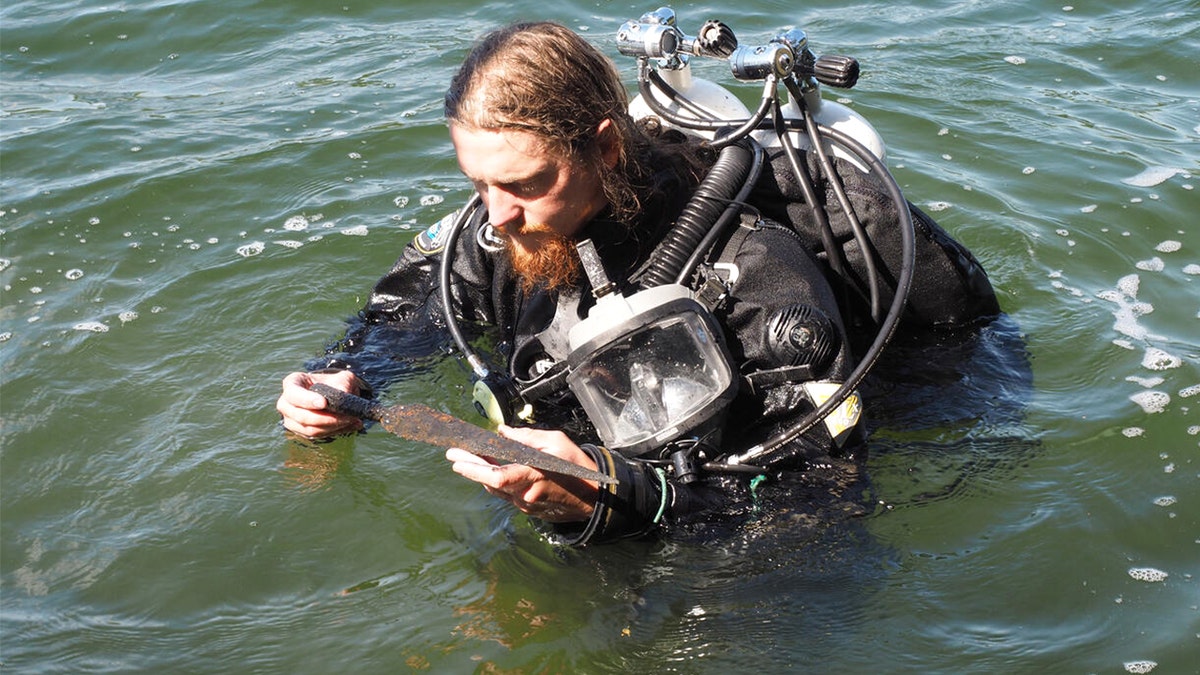
Excavators have retrieved hundreds of weapons from the lake, including 145 axes and more than 60 spearheads. (M. Trzciński, Muzeum Pierwszych Piastów na Lednicy via Facebook)
As to why the weapons were left in the lake, experts say there are two main hypotheses.
In the first theory, archaeologists think the weapons fell in the lake during battles over the Lednica stronghold, likely during the 1030s, when Czech Duke Bretislaus invaded Poland.
TEST YOURSELF WITH OUR LATEST LIFESTYLE QUIZ
On the other hand, the weapons may have been ritually placed in the water as offerings, the museum said — even as Christianization was underway.
“Such practices are known from earlier periods and many places across Europe,” said Kowalczyk.
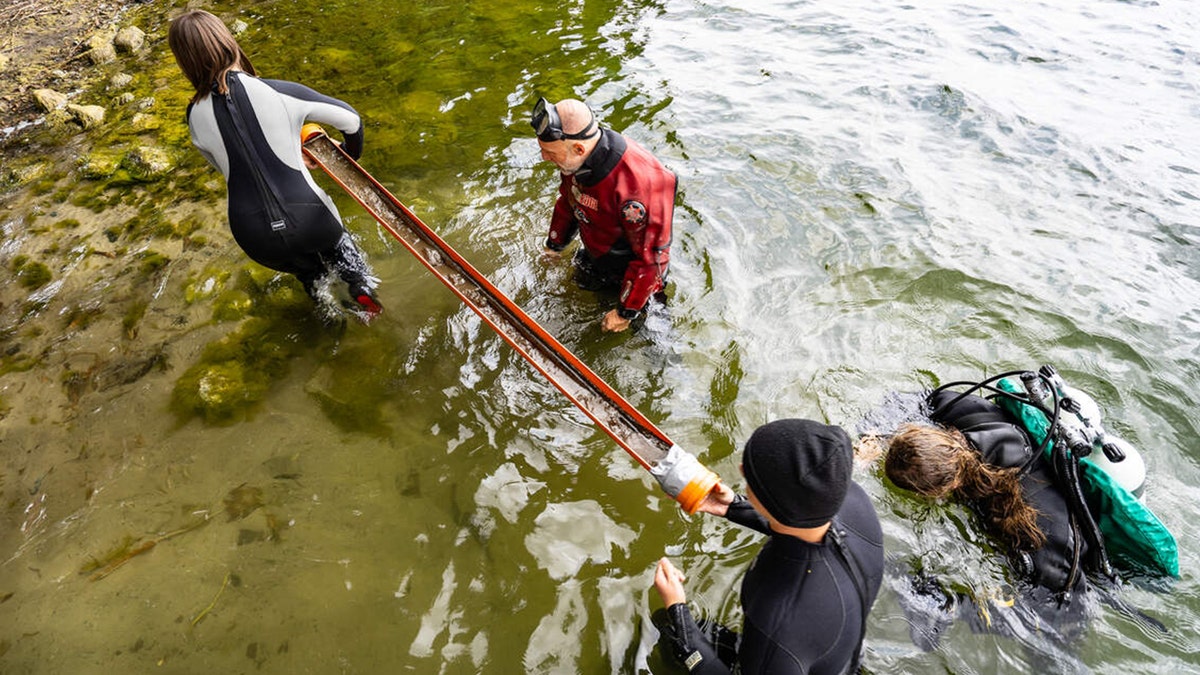
“Water was perceived as a gateway to the world of the dead, and throwing valuable objects into it was an act of deep symbolic meaning,” said a museum director. (M Trzciński, Muzeum Pierwszych Piastów na Lednicy via Facebook)
“Water was perceived as a gateway to the world of the dead, and throwing valuable objects into it was an act of deep symbolic meaning.”
Kowalczyk emphasized the special significance that Ostrów Lednicki holds in Polish history — including being the site where Mieszko I was likely baptized.
CLICK HERE TO GET THE FOX NEWS APP
“It should be emphasized that it was on Ostrów Lednicki that the oldest Christian liturgical objects ever found in Poland were discovered — including a staurotheke (a reliquary of the True Cross), a liturgical comb made of ivory, a three-armed iron censer with holes for suspension and bone plaques from a reliquary chest,” he said.
By Andrea Margolis
Source link