
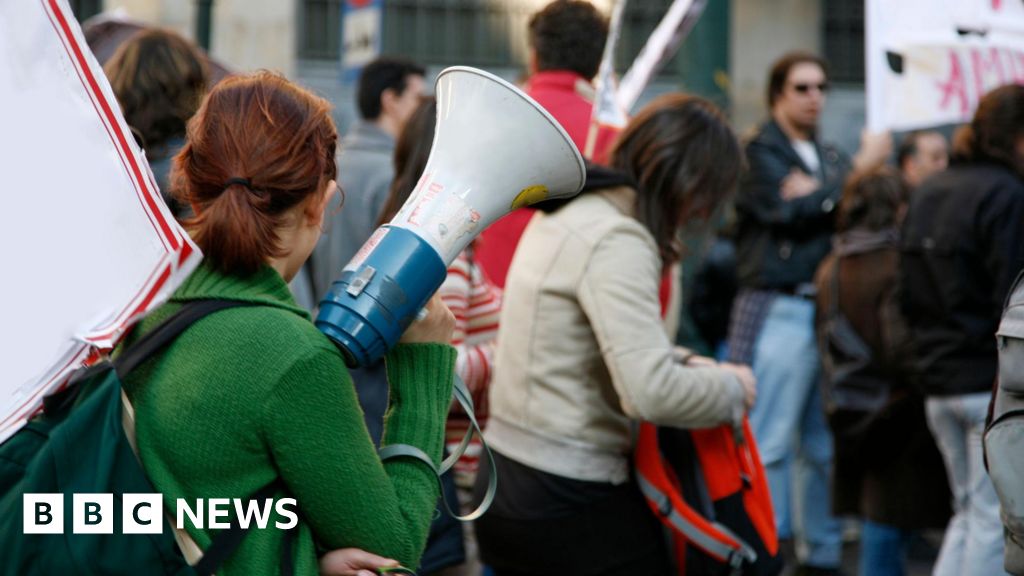
Protests on campus have taken place over the last few years, including at Oxford before a talk by gender-critical academic Kathleen Stock.
Protesters said they were not opposed to Prof Stock’s right to freedom of speech, but the use of the Oxford Union platform to express “anti-trans views”.
Then Prime Minister Rishi Sunak said the protests “shut down discussion”.
When the legislation was originally introduced, the then Education Secretary Gavin Williamson said it would allow speakers to “articulate views which others may disagree with as long as they don’t meet the threshold of hate speech or inciting violence”.
There were concerns that the law would leave universities with a legal obligation to protect Holocaust deniers from being ‘no-platformed’ on campuses, causing severe distress amongst students, according to the National Union of Students.
“Many of us were truly dreading the impact this Act would have, serving to further divide our campuses and put marginalised student communities further at risk,” vice-president Saranya Thambirajah added.
“There are already duties on universities to ensure free speech, but what this is doing is removing a set of really burdensome restrictions .. that were going to be potentially very disruptive”, Jo Grady, general secretary of the University and College Union said.
Ms Grady believes a focus on financial stability is “incredibly important” and is a change from the focus on the “culture war” she has seen over recent years.
In the independent review of the OfS, Sir David Behan noted the regulator’s role had widened in recent years, and that for the “the fourth education revolution” it needed to reduce its objectives, and focus on “monitoring financial sustainability, ensuring quality, protecting public money, and regulating in the interests of students”.
By
Source link