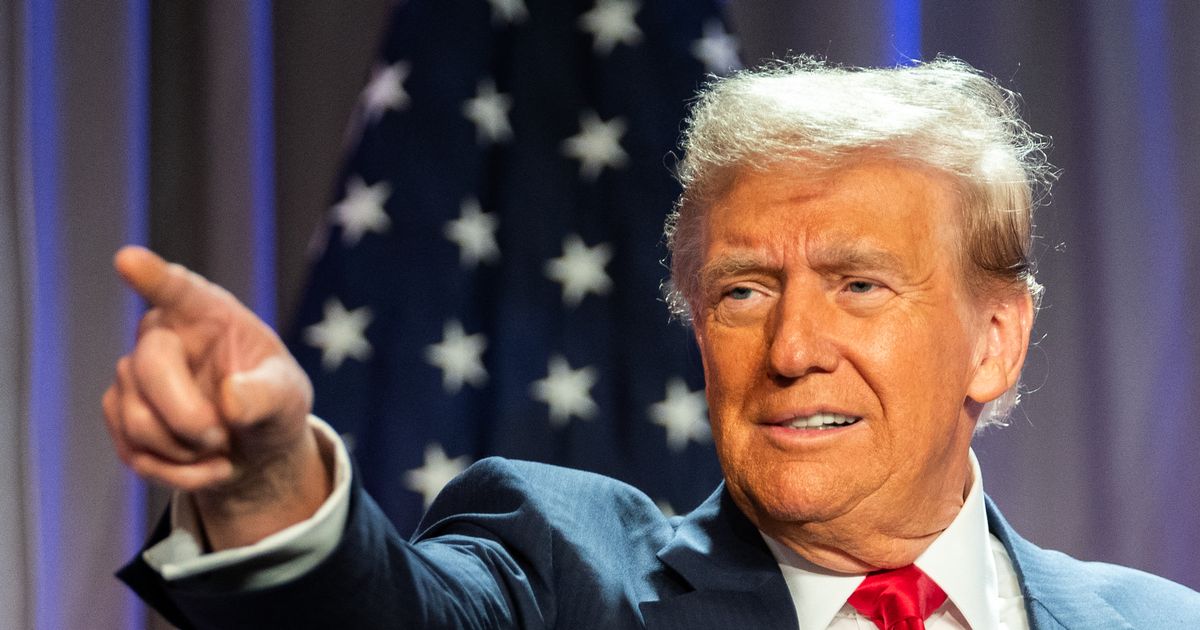
Trump has long accused Venezuela of flooding the US with drugs – and in 2020 President Nicolas Maduro was indicted in the US on narco-terrorism charges – but that’s not his only motivation
Donald Trump’s bombing of Venezuela’s capital Caracas is a huge escalation of a long running feud between the US and the latin American nation. Trump has long accused Venezuela of flooding the US with drugs – and in 2020 President Nicolas Maduro was indicted in the US on narco-terrorism charges.
The US does not recognise Maduro as the legitimate leader of Venezuela, and prior to today had a $50 million reward available for his capture. And it seems likely that’s the argument the Trump administration will use to get around having to consult congress before committing acts of war.
In the same way they argued strikes on boats were legal because it was part of a “counter narco-terrorism campaign”, and not an international armed conflict, Trump will likely argue the attack on Caracas and abduction of Maduro and his wife is effectively a police action, pursuing Maduro as the head of an international drug cartel.
Speaking to the New York Times this morning, Trump wouldn’t be drawn on whether he had consulted Congress ahead of the strikes.
And Secretary of State Marco Rubio’s early-morning post on X gives more indication the US don’t consider this an act of war that would require Congessional approval. “Maduro is NOT the President of Venezuela and his regime is NOT the legitimate government,” he wrote. “Maduro is the head of the Cartel de Los Soles, a narco-terror organisation which has taken possession of a country. And he is under indictment for pushing drugs into the United States.”
Republican Senator Mike Lee says he’s spoken to Rubio, and learned the “kinetic action we saw tonight was deployed to protect and defend those executing the arrest warrant”. He added: “This action likely falls within the president’s inherent authority under Article II of the Constitution to protect U.S. personnel from an actual or imminent attack”.
On what basis the Administration believes US arrest warrants have any validity in another sovereign country is yet to be explained.
But there are other reasons Trump wanted changes in Venezuela. First of all, he wants regime change. Maduro is widely considered a dictator, and his leftist positioning is distinctly at odds with Trump’s.
Since returning to office Trump has been trying to assert his dominance in the region and reshape latin America in his own image. He’s regularly boosted MAGA-adjacent leaders in the Dominican Republic, Honduras and Argentina – while trading jibes with the very much not MAGA-adjacent leaders in Mexico and Colombia.
The second reason for forcing change at the top of Venezuela is much simpler. Oil. Venezuela holds the largest oil reserves in the world – more than 300 billion barrels – all of which is under the tight control of state-run oil firm PDVSA.
A change in leadership in the country could prompt a loosening of the state’s grip – and would allow US oil firms, many of which are Trump donors, access the country’s vast bounty.
By
Source link