
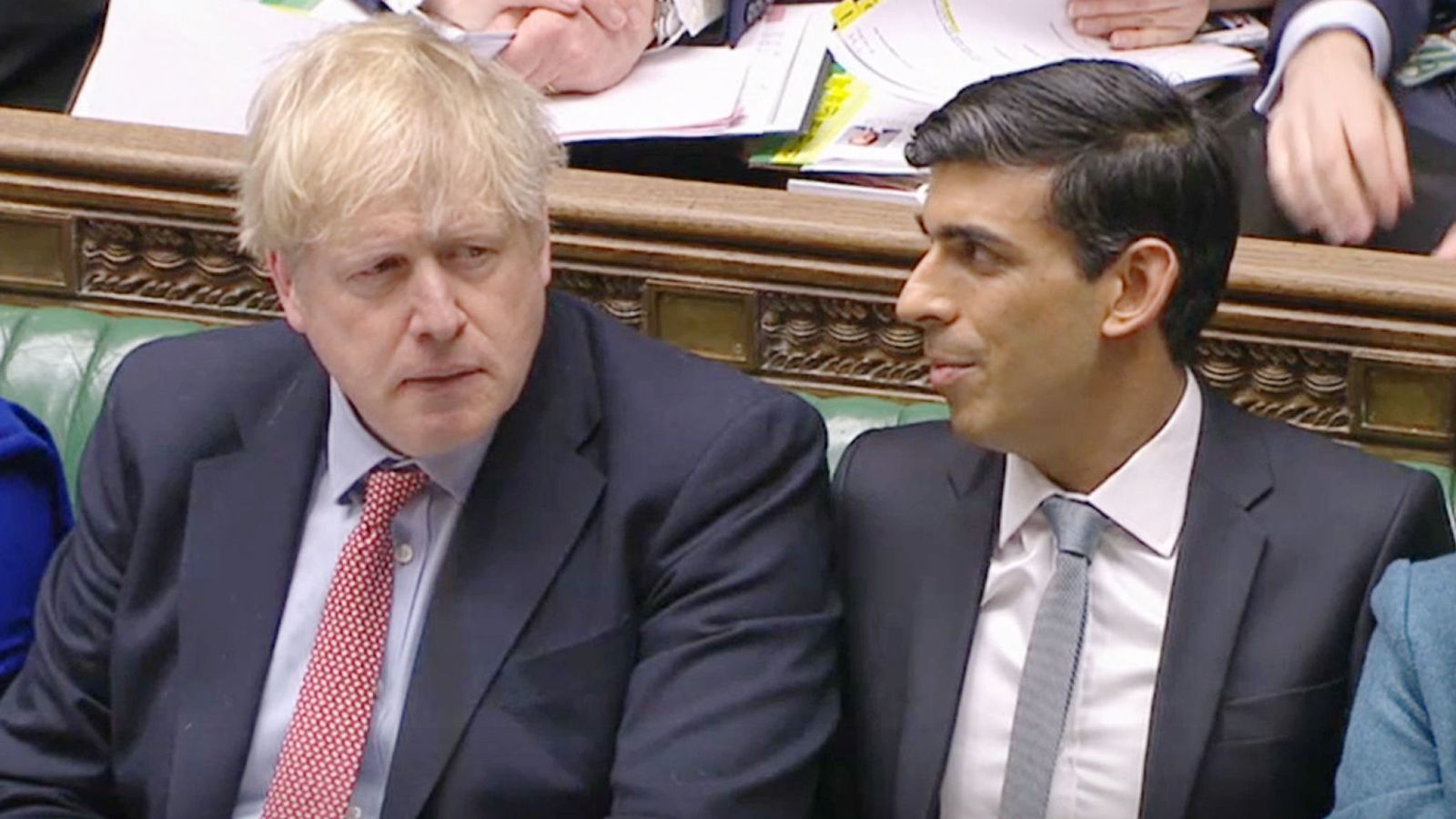
Budget Day – the moment it all became very real.
Before the markets opened the Bank of England fired a shot in the economic battle against the Coronavirus pandemic with a surprise half percentage point cut in interest rates.
This the first salvo in a coordinated programme between the Bank of England and 11 Downing Street, the new chancellor Rishi Sunak later unveiled a raft of measures in the Budget.
There was targeted help for businesses, individuals and the NHS as the country tries to navigate a public health and economic crisis of a magnitude we cannot yet know.
Emergency measures for critical times as the economic risk of what could unfold in the coming weeks hit home and the scale of the public health risk hit the heart of government, with health minister Nadine Dorries testing positive for the virus.
Boris Johnson’s government – and parliament – are carrying on as normal for now.
But the scale of the changes coming to all our lives in the next few days can’t be overestimated.
For the new chancellor it must have been a daunting task, although he stepped up ably.
He has been in the job for just under four weeks and had to deliver a Budget against an economic backdrop you cannot forecast and public health crisis you cannot fully predict.
And so today he offered up two budgets. First was the Coronavirus action plan.
There was a £12bn stimulus package to counter the economic shock, with £5bn for the NHS and a promise that the health service however many “millions or billions” more was required to fight the diseases.
A further £7bn was earmarked for businesses, as the chancellor announced business rates would be abolished for a year for small businesses in hard hit sectors and a new loan guarantee scheme.
Tax payments were postponed as the government dished out £3,000 cash grants for small businesses that pay no business rates.
And for workers and those on benefits, more support in accessing sick pay and financial support.
The second budget was the one the Treasury alongside Mr Sunak’s predecessor Sajid Javid had been working on for months: the ‘manifesto budget’ designed to sketch out this new government’s five-year big investment programme and spending plans.
The years of Tory austerity were over and the spending taps were turned on, all funded by the biggest rise in borrowing for 30 years.
“This is the first budget of a new decade. The first in more than 50 years outside the EU. And the first of this new government,” said Mr Sunak.
“At the election we said we needed to be one nation. While talent is evenly spread opportunity is not and we need to fix that. This is a Budget that will deliver on our promises to the British people.”
Hundreds of billions of capital investment for roads, rail and broadband over the next five years. Billions more for public services too.
Boris Johnson has repeatedly signalled his administration is a break from the past and he was keen to prove that in an economic programme that spoke to Jeremy Corbyn’s observation after the election that Labour had “won the [economic] argument” at least.
This was a budget borrowed straight from Labour’s playbook in a sign that the prime minister, who redrew the political map in the last general election, is determined to hold onto his new political ground.
This was, as Resolution Foundation chief Torsten Bell wryly observed, a Conservative chancellor outlining plans for a bigger state than under Tony Blair and more borrowing than under Gordon Brown.
And if you were in any doubt over the scale of the Conservative Party reinvention – and economic lurch leftwards – you only had to wait for the old guard on the backbenches to defend the Conservative party’s great tradition of prudent financial management and fiscal restraint.
Theresa May spoke for those worried about big public and capital spending as the former prime minister gently admonished the new chancellor.
“While spending a lot of money may be popular, there is of course that necessity to have a realistic assessment of the longer-term impact of those decisions,” she said.
“It is also necessary to have that restraint and caution that enables us to make the public finances continue to be strong in the future.”
And the former chancellor Sajid Javid urged this successor to stand firm on the fiscal rules of the manifesto.
“Sticking to those rules in normal time is what separates us from the parties opposite,” he cautioned.
But the five-year programme is a budget drawn up before the coronavirus pandemic changed everything.
The GDP forecasts published on Wednesday are already chronically out of date because they fail to include the expected economic impact of COVID-19.
The UK could be heading to recession and further stimulus could be required.
It was a budget which aimed to vaccinate the economy in the short term and set out a vision for the next five years.
Mr Sunak delivered on the task.
But ministers know they’re not going to be judged on what happens in five years’ time.
This government will be judged on how it handles this pandemic in the next five days, five weeks, five months.
Mr Johnson wanted to prove to the public that he would honour the promises he made in the election.
But his success will depend not on the promises made in the budget today but the actions he takes to steer us through what is about to come.
By
Source link