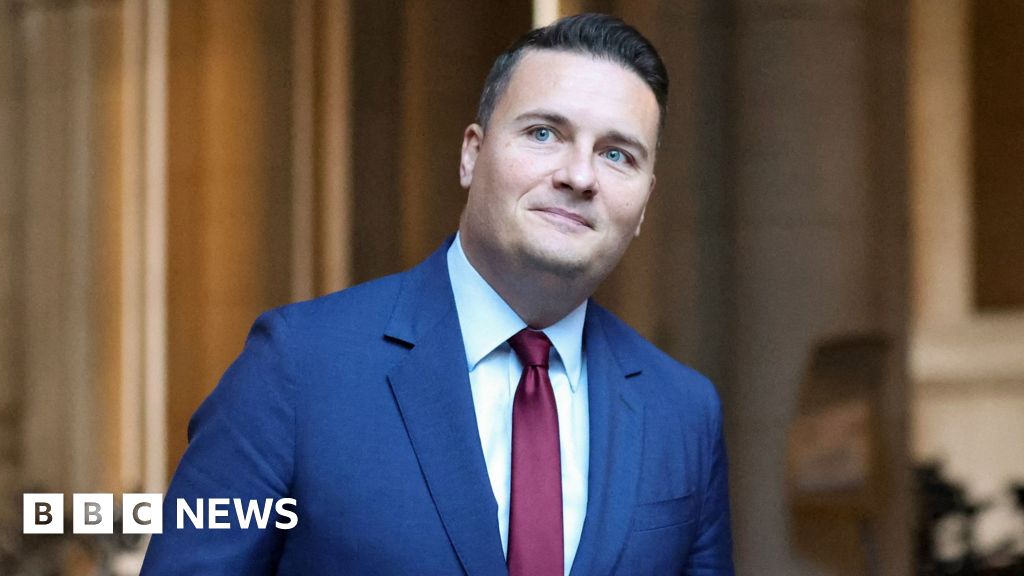
Health Secretary Wes Streeting says the doctors’ union, the British Medical Association, are acting like “moaning minnies” in opposing the rollout of online GP appointment booking.
The union is in formal dispute with the government after it asked all GP practices in England to offer patients the option of making non-urgent appointments online from the start of October.
Lastest NHS data shows more than 98% of surgeries are doing that, and Streeting praised GPs for embracing it, telling BBC Breakfast it was “about time the NHS caught up with the rest of the 21st century”.
But the BMA has suggested patients could be put at risk by the move and surgeries overwhelmed by demand.
Streeting said: “GPs have really embraced this. You would think from listening to some of the moaning minnies in the BMA that GPs have been resistant, they’re not doing this.
“Actually the overwhelming majority have, and I’m thankful to them,” he said.
According to new figures from the Office for National Statistics (ONS), a higher proportion of people in England are now contacting their GP surgery online than by phone.
Data covering three weeks from mid-September suggest just over 43% of people went online to contact their GP – an increase of a percentage point from the previous month – compared with 41% percent on the phone.
Streeting has heralded the figures as “a massive step” towards meeting the government promise to end the “8am scramble for appointments”.
The government has mandated that online appointment bookings must operate between 08:30 and 18:00, Monday to Friday.
Alongside requesting non-urgent consultations, patients are able to ask questions and describe symptoms and request a call back.
But the BMA says patients are being put at risk because urgent requests are not being triaged – the most serious ones prioritised and dealt with first – and practices are overwhelmed.
“The government has merely increased the potential for patient safety issues to arise,” said Dr David Wrigley, the deputy chair of the BMA’s General Practice Committee for England.
“The software simply does not filter out routine from urgent requests,” he added.
Patients’ group Healthwatch England also raised concerns, saying some people have not been adequately informed about the changes, in particular that online booking is not to be used for emergencies.
The group also reported practices restricting online bookings to mornings and said that less digitally literate people find the system hard to navigate.
Jess Harvey, a GP in Shropshire and a member of the BMA, told BBC Radio 4’s Today programme that surgeries were already “saturated and working at full capacity”.
She said GPs want to be responsive to patients but that now there is an “open floodgate for people to contact us” and “there is also a reality here that we have to work safely”.
She accused the government of having “created unrealistic expectations for patients”, adding: “If they want us to do this extra work, it has to be funded for it to be done safely.”
The government said it had provided extra money this year as well as recruiting 2,500 more GPs – although some of them are part-time.
By
Source link