

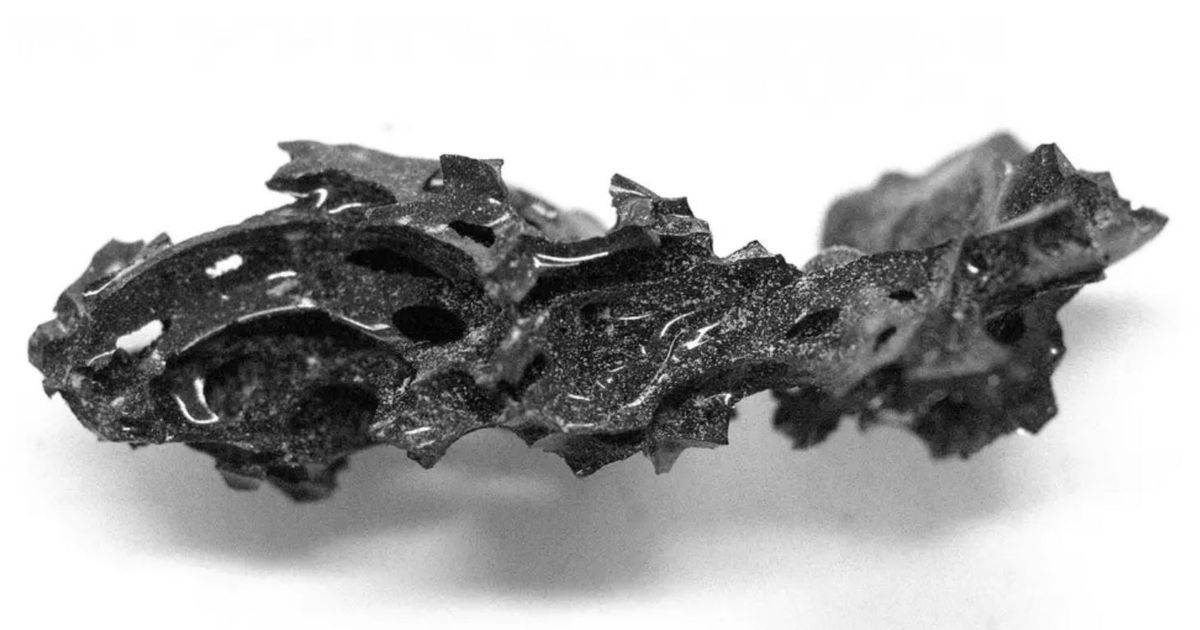
Archaeologists have found an individual’s skull was turned to glass during the eruption of Mount Vesuvius, which led to the famous destruction of the Roman town Pompeii
Archaeological evidence has found that an individual who died in he infamous volcanic eruption near Pompeii had his skull turned to glass from the heat. The victim lived in Herculaneum, a town on the west coast of modern-day Italy.
Erupting in 79 CE, the volcano’s hot ash clouds transformed the person’s brain into a dark-coloured, organic glass while they were lying in their bed. The study said it was the only such occurrence on Earth.
The scientists said: “The glass that formed as a result of such a unique process attained a perfect state of preservation of the brain and its microstructures.”

The person is believed to be a young man, aged around 20, who may have been the guardian of the Collegium Augustalium, a public building dedicated to the worship of Emperor Augustus on the city’s main street.
The phenomenon is especially rare, as glass requires very specific conditions to form. A substance’s liquid form must cool fast enough to not crystalise when it becomes solid, meaning it has to become solid at a temperature much higher than its surroundings.
In 2020, scientists thought they found the only example of glass formed naturally from organic matter in the same Roman town. In this instance, X-rays and electron microscopy showed that the individual’s skull would been heated to 510°C.
It then would have rapidly cooled and turned into glass. But the temperature of pyroclastic flows in Vesuvius would not have reached higher than 465°C and would have cooled too slowly.

Exceptionally well-preserved networks of neurons, axons, and other neural structures have been revealed by scanning the brain remains and the guardian’s spinal cord.
A super-heated ash cloud must have come before the flows and caused the person’s brain to turn to glass. These same kinds of clouds have been seen in recent volcanic eruptions.
The body was found in the Collegium Augustalium, in a wooden bed. Vesuvius is only 13km away from Herculaneum.
For the latest breaking news and stories from across the globe from the Daily Star, sign up for our newsletters.
By staronline@reachplc.com (Rebecca Whalley)
Source link