The framework is the special Brexit deal which applies to Northern Ireland and means it continues to follow some EU laws relating to goods.
The brake was designed to give Stormont’s politicians a greater say before any amended EU rules could take effect in Northern Ireland.
Entirely new rules are dealt with under a similar process known as an applicability motion.
The move by unionist parties before Christmas is being viewed as a first test of the mechanism since power-sharing returned at Stormont almost 12 months ago.
There are restrictions on its use for assembly members who wish to use the brake.
Firstly, the measure can only be used in the “most exceptional circumstances and as a matter of last resort”.
The mechanism also cannot be used for “trivial” reasons and those seeking it to be pulled must demonstrate that the rule being challenged is having a “significant” impact on everyday life in Northern Ireland.
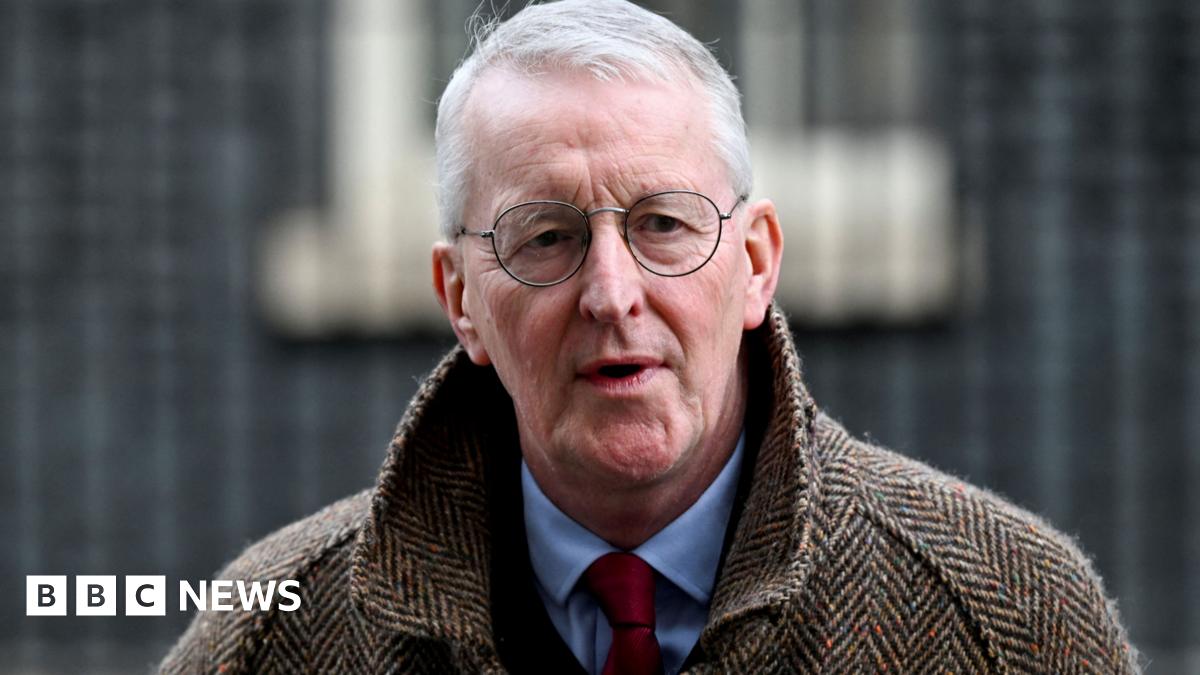
Unionist parties had a two-month “scrutiny period” from the publication of the EU law to make their request and for the government to respond, making Monday the deadline for a decision by Northern Ireland Secretary Hilary Benn.
In his seven-page letter, Benn outlined his reasons for not pulling the Stormont Brake, including:
– There was “already existing divergence” in labelling for chemicals in Northern Ireland compared to Great Britain. Benn said these differences “have never been raised with the government as creating difficulties”.
– The “overwhelming majority” of businesses in the UK internal market also trade with the EU market, and would “be in a position to continue to place their products on the Northern Ireland market”.
– Indications from industry suggest routine labelling changes are made on average every 30-36 months, suggesting that most businesses “are likely to undertake routine labelling changes”.
Benn concluded that the requirements “would not lead to significant impacts specific to the everyday life of communities in Northern Ireland in a way that would be liable to persist”.
The secretary of state said the government would “take any future steps necessary to avoid new barriers arising” from the EU rules.
“To this end we will consult on how best to safeguard the UK internal market, including on whether to apply a consistent regime across the UK,” he said.
“This reflects the strong shared interest between those bringing this notification forward and the Government in protecting the UK internal market.”
The Northern Ireland secretary thanked unionist MLAs for their “genuine and sincere consideration of the issues”.
“It is right that elected representatives in Northern Ireland have the opportunity to raise concerns about the application of these measures and look to do everything possible to avoid significant impacts on the constituents they represent,” he wrote.
By
Source link