Charities supporting veterans, victims of domestic abuse and care leavers all welcomed the announcement.
However, Polly Neate, chief executive of Shelter, said: “It’s absolutely right that people fleeing domestic abuse, care leavers and veterans are given access to a secure, genuinely affordable home.
“But changing the rules for who qualifies for homes where won’t address the fact that there’s just fundamentally not enough social housing available.
She called for a “clear target and investment for building social rent homes”.
Labour has promised to overhaul planning rules and reintroduce mandatory local housing targets to help build 1.5 million new homes over the next five years.
However, the party has not given a target for the number of new social homes that it wants to build.
Social housing, which is provided by councils or housing associations, is more affordable as rents are set below market rates.
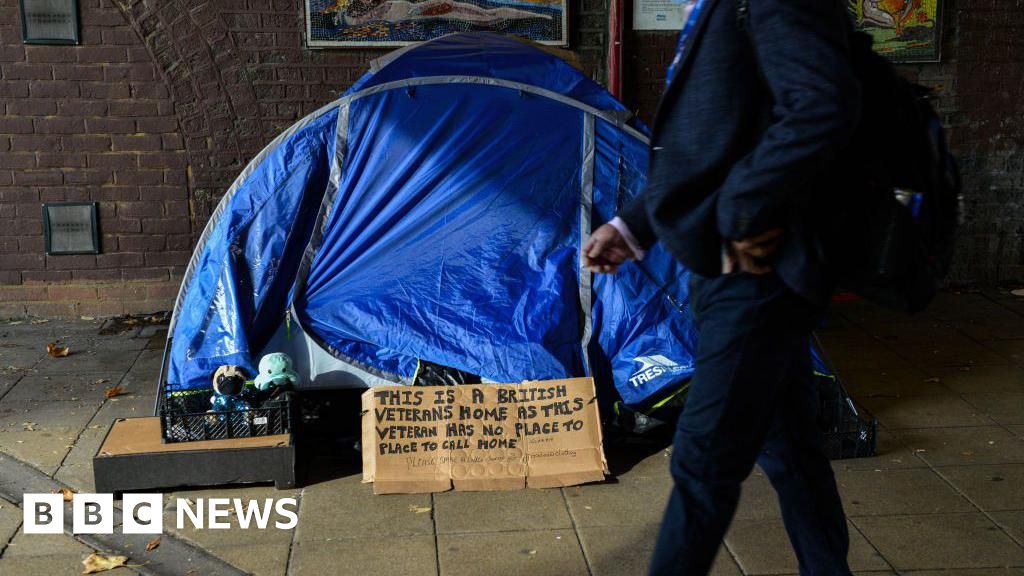
James Needham, chief executive of Help for Heroes, said: “We know that many of the UK’s veterans struggle to make the transition back to civilian life after their service is over.
“Increased levels of homelessness is just one of the ways in which these struggles manifest; particularly among those who join and leave at a young age.
“While this is a positive step, we must all be mindful that homelessness is rarely an issue that occurs in isolation, and we look forward to continuing to work with the UK government to understand, and implement, the changes required to help all veterans and their families live well after service.”
Farah Nazeer, chief executive of Women’s Aid, said reforming local connection tests would “make a real difference” to survivors of domestic abuse.
“We see firsthand the devastating cost of the housing crisis on survivors, who are often forced to ‘choose’ between homelessness and housing insecurity or risking their safety by remaining with a perpetrator,” she said.
Katherine Sacks-Jones, chief executive of the charity Become, said the announcement was a “welcome step” which would help address the “care cliff” facing young people leaving care, “where important support and relationships disappear and they are expected to become independent overnight”.
By
Source link