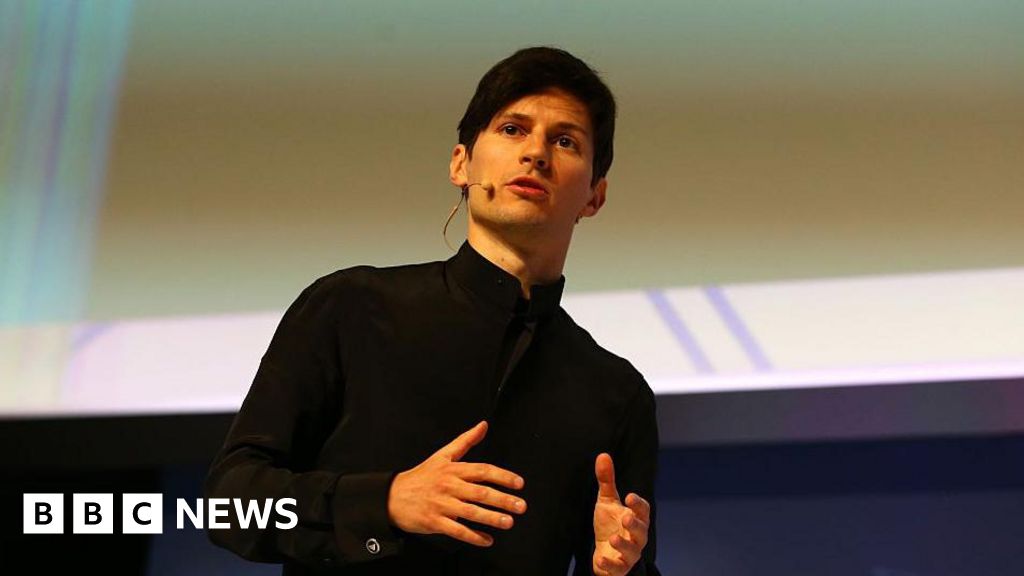
“All these accusations against Durov sound absurd,” one political analyst in the studio declared. “Accusing him of all the crimes that are committed on his platform is like accusing [France’s] President Macron of all the crimes that happen in France. It’s the same logic.”
Russian newspapers, too, went big on the story. Several dailies expressed concern that Pavel Durov’s arrest could have serious consequences for Russia.
“This blow to Telegram threatens to be a blow to Russia,” wrote Nezavisimaya Gazeta. “With Pavel Durov’s arrest, Western intelligence services could obtain the messenger’s encryption keys.”
“Telegram might become a tool of Nato, if Pavel Durov is forced to obey the French intelligence services,” declared Moskovsky Komsomolets, adding: “Telegram chats contain a huge amount of vitally important, strategic information.”
In April 2018, the Russian authorities began blocking access to Telegram, only to lift the ban in 2020. Today, not only do Russian officials use the messenger, but so does the Russian military, including soldiers fighting in the so-called “Special Military Operation” (Russia’s war in Ukraine).
“If Telegram crashes,” Moskovsky Komsomolets asked today, “how is [our army] going to fight?”
In the West, Pavel Durov’s detention has sparked a debate about free speech.
In Russia, too, presidential human rights ombudsman Tatyana Moskalkova claimed that “the real reason for arresting Pavel Durov was to shut down Telegram, a platform where you can discover the truth about what’s happening in the world. Everyone who strives for free speech protests this.”
Ms Moskalkova made no mention of the Signal messaging app, to which the Russian authorities blocked access earlier this month, or YouTube, access to which has been severely limited now in Russia. Facebook and Instagram have already been blocked here.
And what of those rumours of a Putin-Durov meeting in Baku earlier in August. Was there one?
“No,” Kremlin spokesman Dmitry Peskov replied when I asked.
However this mysterious story ends, Moscow will use it to strengthen one of its official narratives: that Russian citizens should beware of the West.
As the popular tabloid Komsomolskaya Pravda put it: “For the West, there is no such thing any more as ‘good Russians’.”
By
Source link