Media playback is unsupported on your device
The PM’s chief adviser Dominic Cummings has said “I don’t regret what I did” as he explained his actions during the coronavirus lockdown.
He said he did not to tell the prime minister when he decided to drive his family 260 miles during lockdown, when his wife developed Covid-19 symptoms.
He told reporters he believed he was acting “reasonably” and within the law.
He said he had not considered resigning over the issue – but should have made a statement on it earlier.
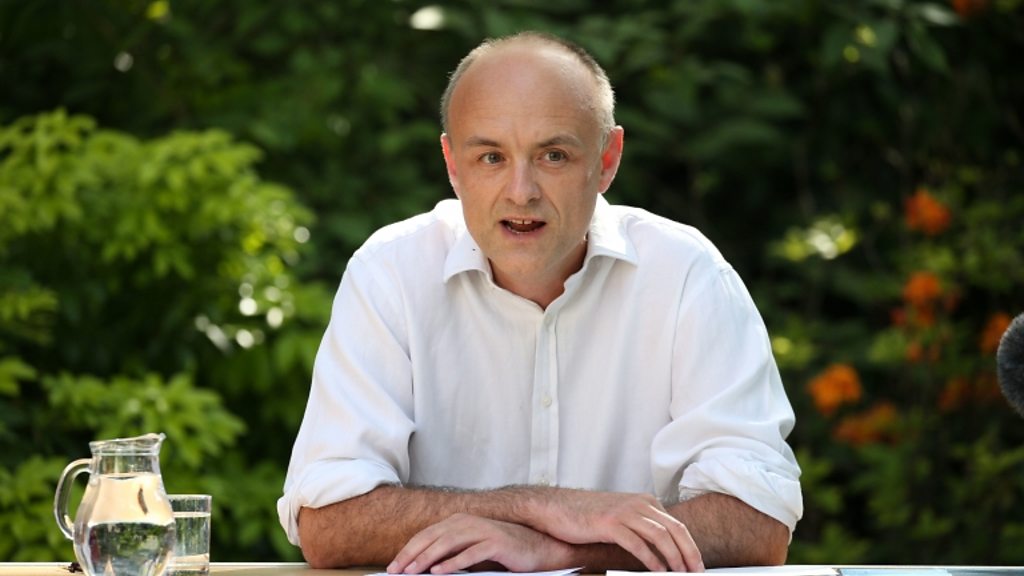
“I don’t think I am so different and that is one rule for me and one rule for other people,” he said in a statement in to reporters in the Downing Street garden.
He said “I do not regret what I did” but added that “reasonable people may well disagree”.
The prime minister gave a statement on Sunday in support of his chief adviser in an attempt to draw a line under the row – but many people, including Conservative MPs, have continued to call for Mr Cummings’ dismissal.
He also revealed that his four-year-old son had been taken to hospital while he was self-isolating at his family’s farm, in Durham.
He was not surprised that lots of people were angry, he said, but “it was a complicated, tricky situation”.
He explained that he decided to take his family to Durham when his wife became ill because there were no child care options in London.
He insisted they did not stop during the 260 mile journey to Durham but may have stopped on the return to London.
He said he isolated in a cottage on his father’s farm 50 metres from his parents’ home.
Analysis
By BBC political correspondent Jonathan Blake
Dominic Cummings has given a detailed account of what he did, when and why. So what have we learned from his side of the story?
He described the fact that his London home had become a “target” which led him to fear for the safety of his family.
He also admitted not telling the prime minister about his decision to decide to travel to his parent’s property in Durham.
He explained some of the uncertainties about his movements including what he was doing in Barnard Castle (to test his eyesight for driving) and whether he stopped on the journey from London (he didn’t).
But on several occasions Mr Cummings described the “exceptional circumstances” of providing care for a small child, which he believed the guidelines allow.
He acknowledged that people were angry and “hated the idea of unfairness” – and admitted that he should have made a statement sooner.
But this was an explanation for his actions, not an apology.
It will be for people to judge whether they accept it as a justification for what many see as acting against the spirit, if not the letter of the rules.
By
Source link