
England’s sunburnt stars look more like Red Lions than Three Lions ahead of a scorching World Cup opener, after also being rocked by a 6.1 Florida earthquake
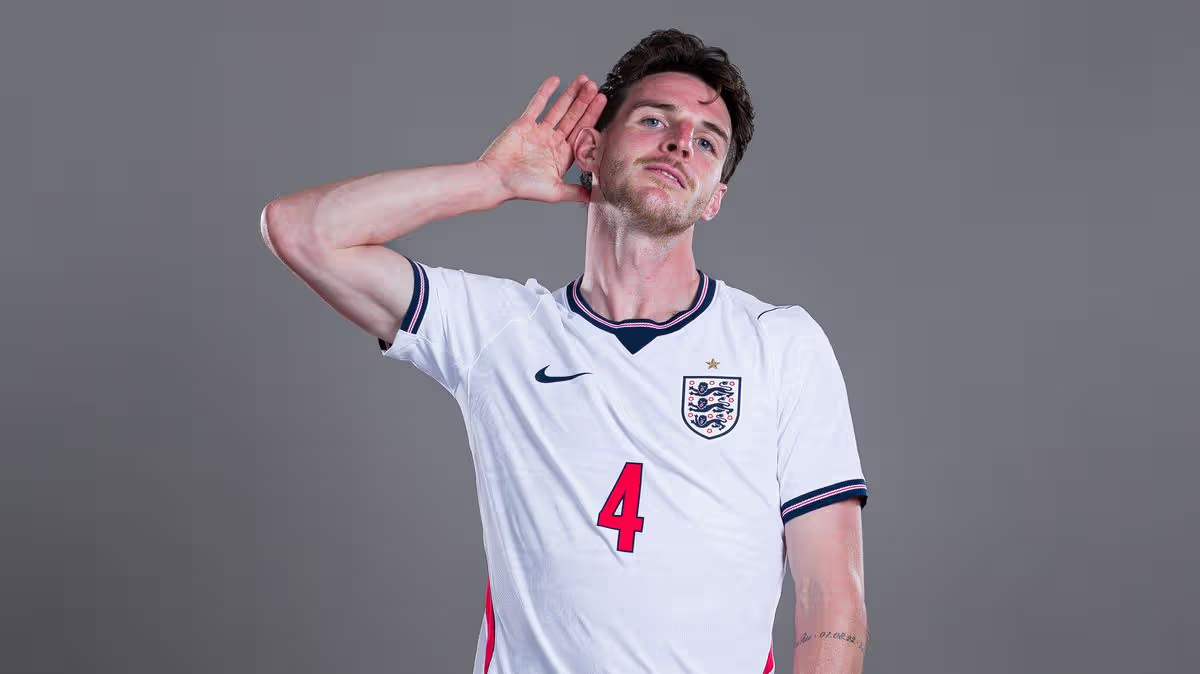
England’s World Cup chances look tan-tastic judging by the sun glow the players have picked up at their Florida training camp. Thomas Tuchel’s squad looked more like “Red Lions” than “Three Lions” as they posed for official photos on the eve of the summer soccer showdown.
Arsenal ace Declan Rice was among those who appeared to have caught the sun at their pre-tournament base in Palm Beach.
Most of the team has spent a week acclimatising to the sticky heat they are likely to experience at the World Cup which kicks off tomorrow in Mexico City. Rice and Everton goalkeeper Jordan Pickford looked more than a little sun-kissed in the snaps.
Nottingham Forest midfielder Elliot Anderson was also in the pink – along with Tino Livramento, James Trafford, Anthony Gordon and Dean Henderson. It looked like a few of the squad may have missed a bit when slapping on their sun cream.
John Stones and Jordan Henderson looked to have got the right mix with both sporting healthy tans. Fans know Tuchel’s team have not been taking it easy loafing around on sunloungers in their training camp.
Footage has shown them being put through their paces in punishing Florida heat in preparation for their opening match against Croatia at the AT&T Stadium in Arlington, Texas, on June 17.
Long range weather forecasters predict the temperature will be at least 33C – 92F – on that day. Supporters were stunned by the intensity of some of the training sessions the players were put through in Florida.
FIFA has brought in hydration breaks midway through each half to protect the players during the tournament where temperatures at some of the 16 venues could top 40C.
That means watching viewers will experience matches divided into NFL-style quarters instead of traditional 45-minute halves.
England’s stars will be supplied with hi-tech palm-cooling devices during the breaks to quickly lower their core body temperature.
Captain Harry Kane has rebutted suggestions his team will wilt in the heat. He said he did not think temperatures had been “too bad” at their Florida base.
Speaking after the team’s 1-0 victory over New Zealand in their first friendly, Kane said: “Obviously we’ve been getting used to it in training. After the first couple of days I felt like most of the lads were used to it.
“We’re all professional athletes. We all have done the right preparation to get ready for this tournament between us and the staff as well. So I think come the tournament it won’t be a factor.”
But medics fear fans will feel the heat. Dr Chris Mullington, a consultant anaesthetist at Imperial College Healthcare NHS Trust, warned conditions could kill.
He said supporters were particularly vulnerable as they “may be exposed for much longer than the match itself – walking to the stadium, queuing in direct sun, attending fan zones, sitting in exposed seats and travelling home on crowded transport.
“They’ll probably not hydrate very well the night before They might not sleep very well, and then they might have some beer during the day. And gradually they’ll get hotter and hotter and hotter. They probably won’t wear a hat.
“They may wear their sports shirt, or, as they sometimes do, they might be not wearing a top, and exposing themselves to those risks as well.
“Then what happens is someone who has got that blocked coronary suddenly finds they’re dehydrated and they’re pushing all their blood flow to their skin.
“Suddenly, not enough blood flow is going to their heart, and they suffer a heart attack that they wouldn’t have suffered were they not in that situation. You can sort of draw parallels with the excess deaths that you see during heatwaves in the UK.”
Dr Mullington said measures FIFA had introduced to protect players – with three-minute mid-half hydration breaks – did not go far enough to mitigate the heat impact. He said fans should get free bottles of drinking water and cooling misting sprays.
Dr Friederike Otto, professor of climate science at Imperial College London, said as temperatures rise in future FIFA should move World Cups from summer to winter as they did in Qatar in 2022.
He said: “It would definitely be advisable to have these either earlier in the year or later in the year to have the ability to have a football party and not something that is a massive health risk.”
Tan lines were not the only danger for the players during their sweltering spell in the Sunshine State.
They were rocked by the second-largest earthquake in the region’s history on Monday after a 6.1 magnitude tremor struck off the coast of Cuba.
By staronline@reachplc.com (Jerry Lawton)
Source link