

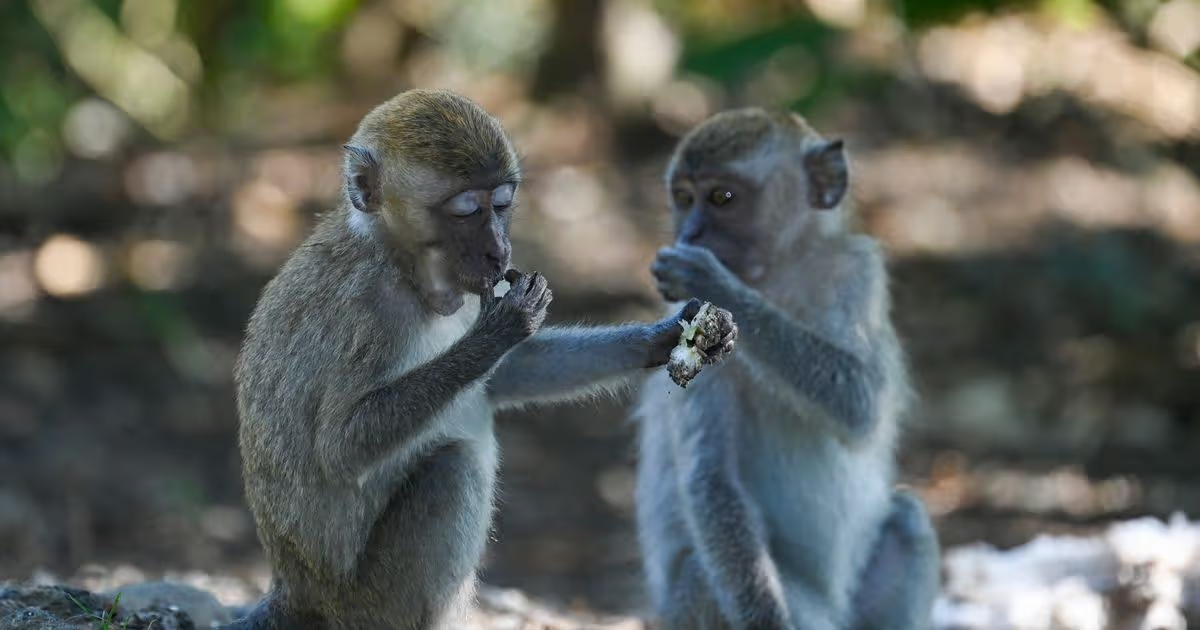
Homosexuality has long been seen in humans and in other animals, but now a new study has revealed that same-sex attraction and behaviours could have been a tactic to stay alive
Homosexuality could have been a survival tactic for humanity to survive, according to a new study. It comes as a major breakthrough in how being gay came to be, proving that being it is genetic.
Same-sex behaviour has been seen in humans for generations and millennia, with accounts stretching as far back as the ancient Greek times. However, it’s not just humans that are known to be attracted to those of the same sex, as animals have also exhibited similar traits.
Some species including chimps, bats and bulls regularly see two male or two female animals come together in a true expression of love. And now, it has been suggested that potentially this could be done as a means of survival.
Experts at Imperial College London found that primates were more likely to show more behaviour akin to same-sex attraction when their habitats were considered dangerous, according to the Daily Mail. This was also the case if their social networks and social ecosystems were larger and more complex.
Their research suggests that homosexuality could have been used to help strengthen the bond of the species, allowing groups of animals to survive harsh conditions as a collective. For example, animals that live in an area where there are many predators could help to survive the area when trusting their calls for help.
Speaking on the findings of the results, Professor Vincent Savolainen explained that these findings revealed that being gay was not contained to just a select few species. Instead, it was far more widespread in the animal kingdom.
“Our findings suggest that same-sex behaviour is widespread rather than rare and that it has likely evolved multiple times across primate lineages, in part as a way to navigate complex social and environmental systems,” Savolainen explained. However, he warned that despite the striking findings, this does not map onto humanity as easily.
“It highlights several promising directions for future research by anthropologists and psychologists interested in the evolutionary and social contexts of same-sex behaviour,” he added. As part of the study, it was revealed that some 491 non-human species were observed, 59 of which showed elements of same-sex behaviours.
Researchers have been keen to find out more about homosexuality and where it came from, suggesting it could be genetic in animals. Previous studies had suggested that some animals could be more predisposed to being gay, with a 2023 study finding same-sex behaviour was inherited by around 6.4% of the macaques observed.
But at the same time, this does open the door to other forms of thought on how homosexuality emerged, with the new analysis pointing to same-sex behaviour being driven by social and environmental factors, instead of genetics only. However, despite this, some debate still remains on how to determine how homosexuality really occurs.
The new research, however, continues to strengthen the belief that homosexuality is a lot more common in the animal kingdom than first thought, with some 1,500 different species showing same-sex behaviours. Various animals and insects have shown homosexual traits in research, ranging from small burying beetles to bottlenose dolphins and ducks.
For the latest breaking news and stories from across the globe from the Daily Star, sign up for our newsletters.
By staronline@reachplc.com (Rory Gannon)
Source link