
Becky Morton,political reporter,and
Daniel De Simone,investigations correspondent
 Reuters
The government has abandoned a final debate on its Hillsborough Law following a backlash from campaigners and some Labour MPs over the extent to which it would apply to intelligence officers.
The draft legislation creates a legal obligation for public authorities to co-operate with and tell the truth to inquiries.
But a government amendment would have made co-operation by intelligence officers with inquiries subject to the approval of the head of their service.
Bereaved families say MI5 and MI6 officers should be fully subject to the proposed law and point to a series of cases where MI5 has provided false information.
The government had originally pulled just the amendment from a vote, due to be held on Monday, before it scrapped the entire third reading of the bill – when a draft law is tidied up before going to the Lords.
A government spokesperson said it would continue to work with all parties to strengthen the bill “without compromising national security”.
Prime Minister Sir Keir Starmer said the government was taking time to ensure it got the balance right when applying the law to intelligence agencies.
“Obviously I have to focus on the national interest, my primary duty as prime minister, which is to keep this country safe and secure,” he added.
Removing the amendment was earlier welcomed by the Hillsborough Law Now campaign group, which said it would “engage further with government to ensure the bill fully applies to the security services whilst not jeopardising national security”.
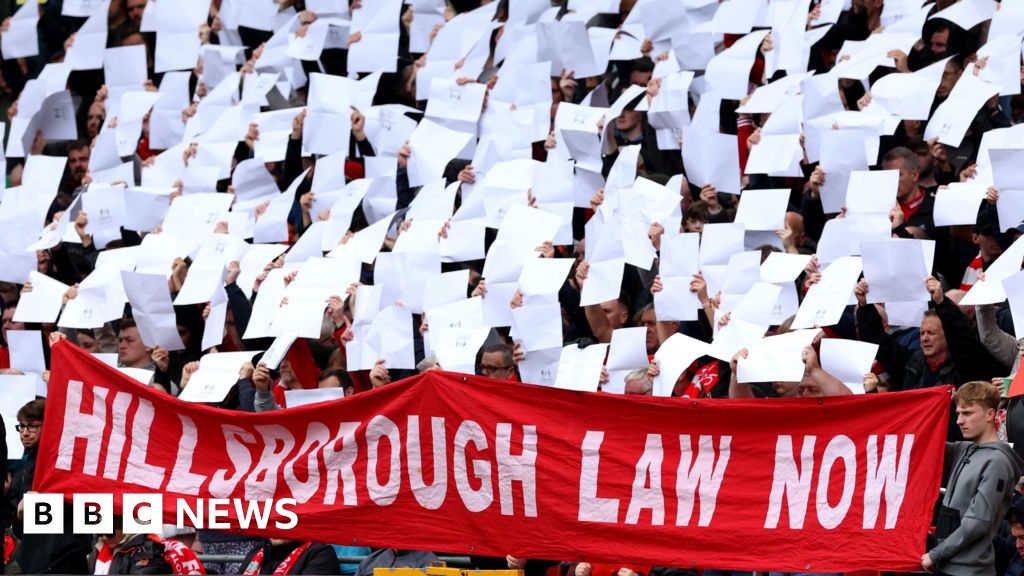
The proposed law – named after the football stadium in Sheffield where a deadly crush occurred in 1989 – aims to make public authorities and officials more accountable for failings.
Ministers were facing a potential rebellion from Labour MPs, with around 30 backing a proposal by Liverpool Labour MP Ian Byrne that would ensure the legislation applied in a fuller way to intelligence officers.
The government could still bring forward revised amendments when it reaches the House of Lords.
Byrne – a long-standing campaigner for the law – told the BBC after the amendment was shelved: “I think there’s been an acknowledgement that their amendment was heading for defeat, and thank God they’ve withdrawn it.”
However, he added: “I won’t vote for any law to leave the Commons until myself and the families are happy with what it contains…
“I have spoken to some families, and they are absolutely firm that it has to be the full Hillsborough Law before it leaves the Commons.”
It is understood that Parliament’s Intelligence and Security Committee did not support the government’s amendment, posing an additional problem for ministers because their amendment had proposed an oversight role for the ISC.
It is also understood that, amid increasing government concern about a rebellion, the head of MI5 Sir Ken McCallum was personally involved in speaking to some MPs.
The draft law, formally known as the Public Office (Accountability) Bill, is designed to stop cover-ups and would place a “duty of candour” on public officials.
However, campaigners had argued that giving those leading the intelligence services approval over disclosures would allow them to choose what could be made public, and said they could not support the bill in its current form.
Families bereaved by the 2017 Manchester Arena attack had also called for the law to apply fully to the intelligence services.
A public inquiry found MI5 had not given an “accurate picture” of the key intelligence it held on the suicide bomber who carried out the attack, which killed 22 people and injured hundreds more.
The Labour mayors of Greater Manchester and the Liverpool City Region, Andy Burnham and Steve Rotherham, had also criticised the government’s amendment, saying it created “too broad an opt-out and risks undermining the spirit of the legislation”.
A government spokesperson said: “This legislation will right the wrongs of the past, changing the balance of power to ensure the state can never hide from the people it should serve, and putting a legal duty on officials to respond openly and honestly when things go wrong.
“The bill will make the police, intelligence agencies and the whole of government more scrutinised than they have ever been, but we can never compromise on national security.”
Earlier, Culture Secretary Lisa Nandy had told the BBC’s Sunday with Laura Kuenssberg programme she was confident the government would be able to resolve disagreements over the bill before Monday’s vote.
She insisted security services would not be exempt from the legislation but said ministers faced the challenge of ensuring officers, who often held confidential information, could continue to do their jobs.
Nandy added the government wanted to make sure “we never ever end up in a situation like we did with the Manchester Arena inquiry… where the security services are able to withhold information and present an inaccurate picture to families and to a public inquiry for a very long time”.
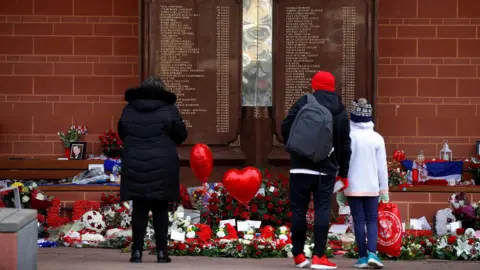
The Hillsborough Law is the result of campaigning by families affected by the stadium crush, which led to the death of 97 football fans.
Police leaders were found to have spread false narratives about the disaster, blaming Liverpool fans, and withheld evidence of their own failings.


By
Source link