
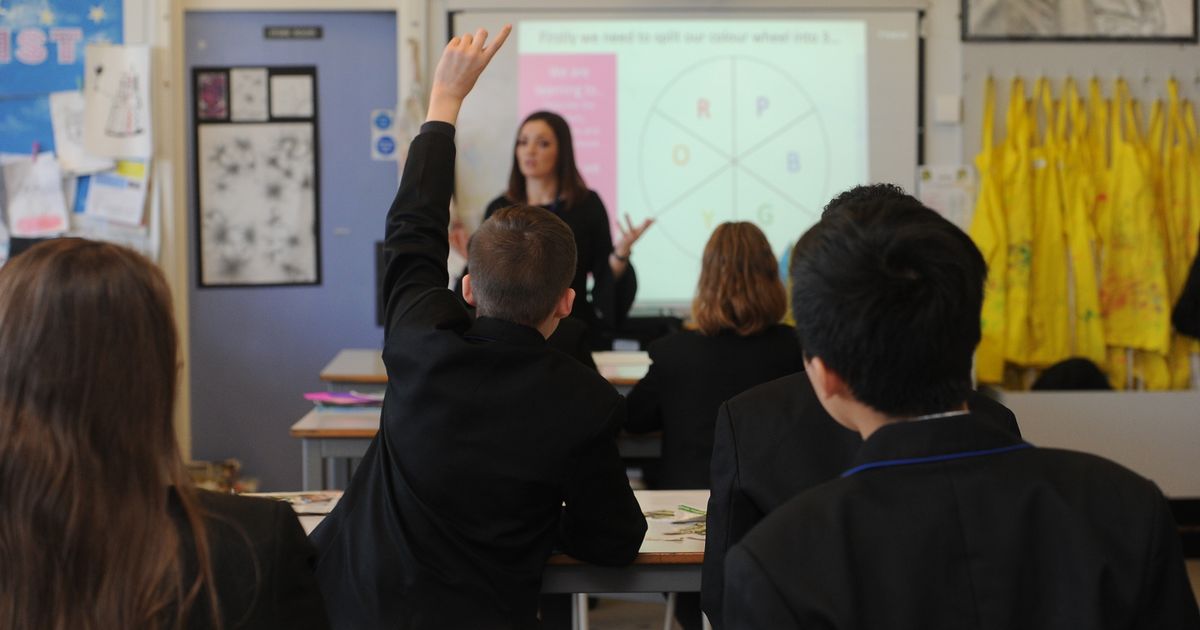
Labour will unveil its long-awaited violence against women and girls (VAWG) strategy on Thursday, with measures to tackle toxic misogyny in schools among the key measures
Labour will unveil a clampdown on toxic misogyny in schools as part of the biggest clampdown on violence against women in British history.
Keir Starmer said the £20million package will help deliver “a responsibility we owe the next generation”. Campaigners say the plans must reach every child in the country – and demanded Relationships, Sex and Health Education (RSHE) is made mandatory for 16 to 18 year olds.
On Thursday the Government will publish its long-awaited violence against women and girls (VAWG) strategy. Labour came to power last year promising to halve cases within a decade, describing it as a national emergency.
READ MORE: Nigel Farage under pressure as watchdog looks at illegal election spending allegationREAD MORE: ‘Momentous day’ as NHS ramps up support for domestic and sex abuse victims
Alarming data shows nearly 40% of teenagers in relationships have suffered abuse by their partner. And a survey of consenting school leaders found 70% of secondary and 28% of primary schools had dealt with child-on-child sexual violence or harassment this academic year.
The Prime Minister said: “Every parent should be able to trust that their daughter is safe at school, online and in her relationships. But too often toxic ideas are taking hold early and going unchallenged.
“This government is stepping in sooner – backing teachers, calling out misogyny, and intervening when warning signs appear – to stop harm before it starts. This is about protecting girls and driving forward education and conversation with boys and young men, which is a responsibility we owe to the next generation, and one this government will deliver.”
Under the plans, teachers will be given specialist training on how to talk to children about issues including consent and the dangers of sharing intimate images. Schools will be selected for a pilot next year, and contracts will be awarded on a school-by-school basis.
Best practice will then be shared, with the Government vowing every child will have access to specialist support by 2029. A new helpline will be launched for young people concerned about their behaviours to get the help they need.
And police and social services will be issued new guidance on intervening in harmful relationships. School chiefs have welcomed the measures, but said it must be accompanied by tougher measures to tackle “poisonous” content influencing youngsters online.
Andrea Simon, director of the End Violence Against Women Coalition (EVAW), told The Mirror: “We welcome reports of increased funding and focus on quality relationships and sex education relevant to the digital age, as we know that this education gives young people the tools they need to develop healthy and equal relationships.
“But we await more detail on what this will look like in practice, given there must be proper resourcing to mean this education reaches every child in every school across the country. Inconsistent delivery of this education across schools has been an issue, and we are concerned that it is not yet mandatory for 16-18 year olds, despite this age group being most likely to experience domestic abuse.”
Education Secretary Bridget Phillipson said: “Having spent years working in a refuge for women experiencing domestic abuse, I know just how much early intervention could have changed lives.
“We cannot simply respond to harm after it happens; we must give young people the understanding and tools they need before attitudes harden into harm.”
Daniel Kebede, general secretary of the National Education Union, welcomed the plan, stating: “We think teachers must be given appropriate time and space in the timetable to do this important work.
“A whole school approach to tackling Violence against Women and Girls requires consistent messages across the curriculum, as well as training and resources. We are pleased to see the government strategy identifies the specific new challenges posed by the impact of social media, an issue education staff are concerned about.”
Paul Whiteman, general secretary of school leaders’ union NAHT, said headteachers have long been calling for specialist training. And Pepe Di’Iasio, general secretary of the Association of School and College Leaders, said: “We look forward to seeing more detail about the specialist training which will be provided to teachers, and further requirements on secondary schools to educate students about healthy and respectful relationships, in addition to the existing statutory Relationships, Sex, and Health Education curriculum.
“It is essential, however, that the government also introduces effective measures to prevent at source the spread of online misogynistic content which is served up to young people by social media algorithms.
“We look forward to hearing how it plans to clamp down on poisonous content which has been allowed to go on unchecked for far too long.”
Victims and Tackling Violence Against Women and Girls Minister Alex Davies-Jones said: “This historic strategy is about stopping harm before it starts, brought by a government which is finally standing on the side of every victim in our country.”
The Mirror’s Justice for Our Daughters campaign has called for tougher action to tackle domestic violence.
By
Source link