

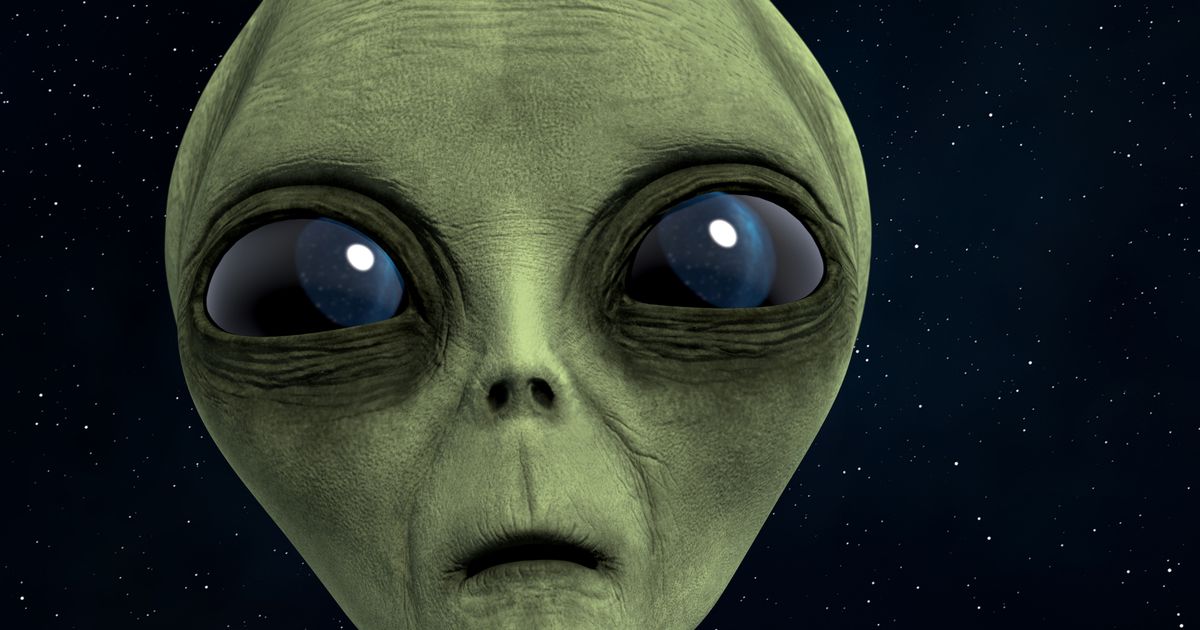
Scientists think they have found the source of life on another planets, but it might not be great news for any future human habitation as they are known to eat fuel that could kill humans
Elon Musk’s plans to colonise Mars have been dealt a blow after Boffins believe they have found what alien life forms eat – and it could kill humans. Researchers say not all life would need the same conditions as we do on Earth to thrive.
And they argue high-energy particle clusters – known as galactic cosmic rays – could sustain life in extraterrestrial worlds. These rays emit radiation which can trigger chemical reactions, a process known as radiolysis, which then can cause molecules to break down and release byproducts that can act as a fuel for life.
Dr Dimitra Atri, who lead the study, said: “This discovery changes the way we think about where life might exist.
“Instead of looking only for warm planets with sunlight, we can now consider places that are cold and dark, as long as they have some water beneath the surface and are exposed to cosmic rays. Life might be able to survive in more places than we ever imagined.”
The researchers focused on Mars and two moons of Jupiter – Europa and Enceladus – and simulated cosmic rays breaking down water molecules at different depths on each world to test how many theoretical cells galactic cosmic rays could support.
They looked at the production of electrons, which are key players in energy production for all living things, and compared the simulation with our understanding of a type of organism on Earth which thrive in extreme environments, known as extremophiles.
But it might not be great news for any future human habitation on other planets as they are known to eat fuel that could kill humans such as a bacterium called Candidatus Desulforudis audaxviator which gets energy from ‘eating’ the radioactive decay of uranium.
Some of these radiation-resistant extremophiles hide underground to avoid the brunt of the radiation. The researchers found that Enceladus’ conditions hold the most promise for sustaining life.
Their findings, which they present in a paper published in the International Journal of Astrobiology, predicts the moon is capable of supporting as many as 42,900 cells per cubic centimeter at a depth of two feet.
Mars can support 11,600 cells at just over half a metre below the surface, and Europa can support 4,200 cells at one metre deep. But life on these planets would likely be the earliest forms of life, rather than walking, talking beings.
Dr Atri wrote: “We emphasize that radiolysis may not only be destructive but could also play a crucial role in creating biologically useful chemicals and facilitating electron transfer processes needed for metabolic activity.
“This provides a broader perspective on how life could emerge and sustain itself in environments traditionally considered inhospitable.”
He called for future planetary missions to focus on the shallow subsurface environments of Mars, Europa and Enceladus and for them to be equipped to detect biosignatures.
Space cadet Musk has previously told of his vision to set up a human colony on Mars, creating a civilisation on the planet before transforming it to be earth-like.
Dr Atri wrote in the study: “If future human habitation is a possibility on Mars’ surface, the polar ice caps may prove to be a source of water for inhabitants, hence making the need for controlled exploration of the caps ever more pressing to prevent unintentional contamination from Earth.”
For the latest breaking news and stories from across the globe from the Daily Star, sign up for our newsletter by clicking here .
By staronline@reachplc.com (Ashley Pemberton)
Source link