
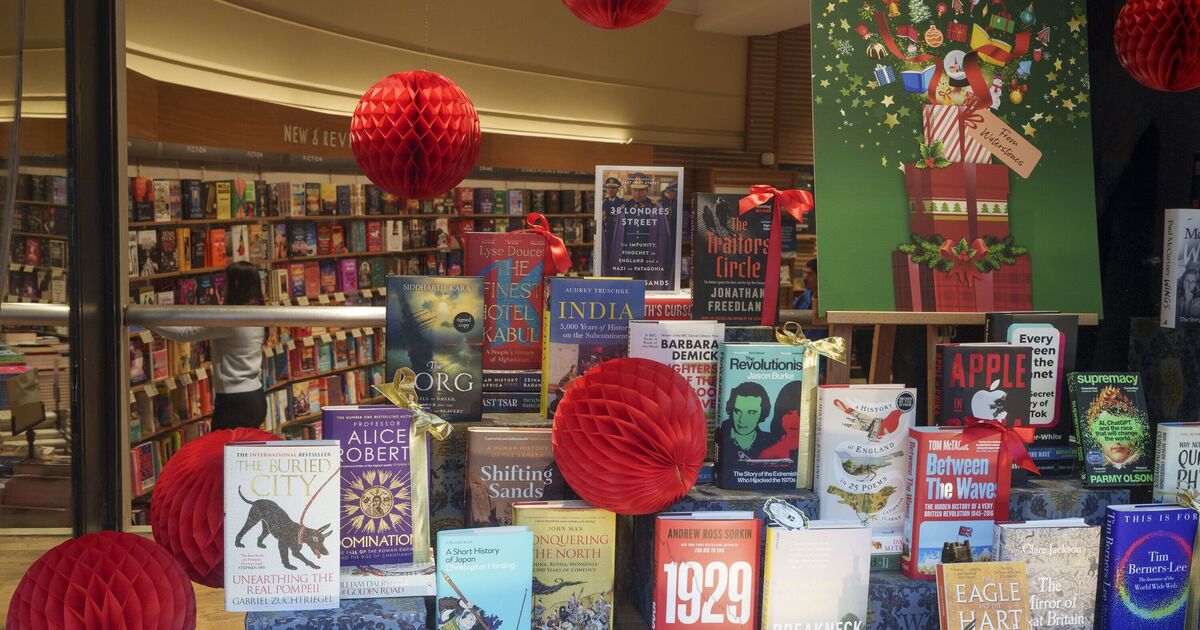
Waterstones has selected some top modern fiction novels for your reading list (Image: Getty)
I love a beach read just as much as the next person, but sometimes we need to delve a little deeper and look to the books that have shaped the world of literature. Without these books, we would likely not have the magical realism books that we all so adore, never mind non-fiction. Waterstones has listed some of the modern fiction novels that you’ve probably “always meant to read”, but just haven’t got round to, and here we have selected seven to get you started.

Haruki Murakami is a bestselling author (Image: Getty)
Norwegian Wood by Haruki Murakami
The book’s synopsis reads: “Toru, a quiet and preternaturally serious young college student in Tokyo, is devoted to Naoko, a beautiful and introspective young woman, but their mutual passion is marked by the tragic death of their best friend years before. Toru begins to adapt to campus life and the loneliness and isolation he faces there, but Naoko finds the pressures and responsibilities of life unbearable. As she retreats further into her own world, Toru finds himself reaching out to others and drawn to a fiercely independent and sexually liberated young woman.
“A magnificent blending of the music, the mood, and the ethos that was the sixties with the story of one college student’s romantic coming of age, Norwegian Wood brilliantly recaptures a young man’s first, hopeless, and heroic love.”
American Psycho by Bret Easton Ellis
The blurb reads: “Patrick Bateman is twenty-six and works on Wall Street. He is handsome, sophisticated, charming and intelligent. He is also a psychopath. Taking us to head-on collision with America’s greatest dream—and its worst nightmare—American Psycho is a bleak, bitter, black comedy about a world we all recognise but do not wish to confront.”
Read more: ‘Masterpiece’ period classic is ‘best book of all time’ – written 208 years ago
Read more: ‘Masterpiece’ Jane Austen novel is ‘greatest book ever’ and best you’ll read
The Virgin Suicides by Jeffrey Eugenides
The synopsis reads: “The shocking thing about the girls was how nearly normal they seemed when their mother let them out for the one and only date of their lives. Twenty years on, their enigmatic personalities are embalmed in the memories of the boys who worshipped them and who now recall their shared adolescence- the brassiere draped over a crucifix belonging to the promiscuous Lux; the sisters’ breathtaking appearance on the night of the dance; and the sultry, sleepy street across which they watched a family disintegrate and fragile lives disappear.”
A Little Life by Hanya Yanagihara
The book’s synopsis reads: “When four classmates from a small Massachusetts college move to New York to make their way, they’re broke, adrift, and buoyed only by their friendship and ambition. There is kind, handsome Willem, an aspiring actor; JB, a quick-witted, sometimes cruel Brooklyn-born painter seeking entry to the art world; Malcolm, a frustrated architect at a prominent firm; and withdrawn, brilliant, enigmatic Jude, who serves as their centre of gravity.
“Over the decades, their relationships deepen and darken, tinged by addiction, success, and pride. Yet their greatest challenge, each comes to realise, is Jude himself, by midlife a terrifyingly talented litigator yet an increasingly broken man, his mind and body scarred by an unspeakable childhood, and haunted by what he fears is a degree of trauma that he’ll not only be unable to overcome—but that will define his life forever.”

Maggie O’Farrell won the Women’s Prize for Fiction for Hamnet (Image: Getty)
Hamnet by Maggie O’Farrell
The blurb reads: “Drawing on Maggie O’Farrell’s long-term fascination with the little-known story behind Shakespeare’s most enigmatic play, Hamnet is a luminous portrait of a marriage, at its heart the loss of a beloved child.
“Warwickshire in the 1580s. Agnes is a woman as feared as she is sought after for her unusual gifts. She settles with her husband in Henley Street, Stratford, and has three children: a daughter, Susanna, and then twins, Hamnet and Judith. The boy, Hamnet, dies in 1596, aged eleven. Four years or so later, the husband writes a play called Hamlet.
“Award-winning author Maggie O’Farrell’s new novel breathes full-blooded life into the story of a loss usually consigned to literary footnotes, and provides an unforgettable vindication of Agnes, a woman intriguingly absent from history.”
The Handmaid’s Tale by Margaret Atwood
The book’s plot states: “Now a Hulu series starring Elizabeth Moss. The Handmaid’s Tale is an instant classic and eerily prescient cultural phenomenon, from “the patron saint of feminist dystopian fiction” ( New York Times ) The Handmaid’s Tale is a novel of such power that the reader will be unable to forget its images and its forecast. Set in the near future, it describes life in what was once the United States and is now called the Republic of Gilead, a monotheocracy that has reacted to social unrest and a sharply declining birthrate by reverting to, and going beyond, the repressive intolerance of the original Puritans. The regime takes the Book of Genesis absolutely at its word, with bizarre consequences for the women and men in its population.
“The story is told through the eyes of Offred, one of the unfortunate Handmaids under the new social order. In condensed but eloquent prose, by turns cool-eyed, tender, despairing, passionate, and wry, she reveals to us the dark corners behind the establishment’s calm facade, as certain tendencies now in existence are carried to their logical conclusions. The Handmaid’s Tale is funny, unexpected, horrifying, and altogether convincing. It is at once scathing satire, dire warning, and a tour de force. It is Margaret Atwood at her best.”
Before the Coffee Gets Cold by Toshikazu Kawaguchi
The plot is as follows: “In a small back alley in Tokyo, there is a café which has been serving carefully brewed coffee for more than one hundred years. But this coffee shop offers its customers a unique experience: the chance to travel back in time.
“In Before the Coffee Gets Cold, we meet four visitors, each of whom is hoping to make use of the café’s time-travelling offer, in order to: confront the man who left them, receive a letter from their husband whose memory has been taken by early onset Alzheimer’s, to see their sister one last time, and to meet the daughter they never got the chance to know.
“But the journey into the past does not come without risks: customers must sit in a particular seat, they cannot leave the café, and finally, they must return to the present before the coffee gets cold…
“Toshikazu Kawaguchi’s beautiful, moving story explores the age-old question: what would you change if you could travel back in time? More importantly, who would you want to meet, maybe for one last time?”
By Molly Toolan
Source link