
NEWYou can now listen to Fox News articles!
Archaeologists in Northern Ireland went out seeking a 400-year-old castle — and ended up finding things that are much older, thanks to the little kids working with them.

In an October statement, Queen’s University Belfast (QUB) said that its archaeologists conducted a two-week excavation to uncover Derrygonnelly Castle in Fermanagh.
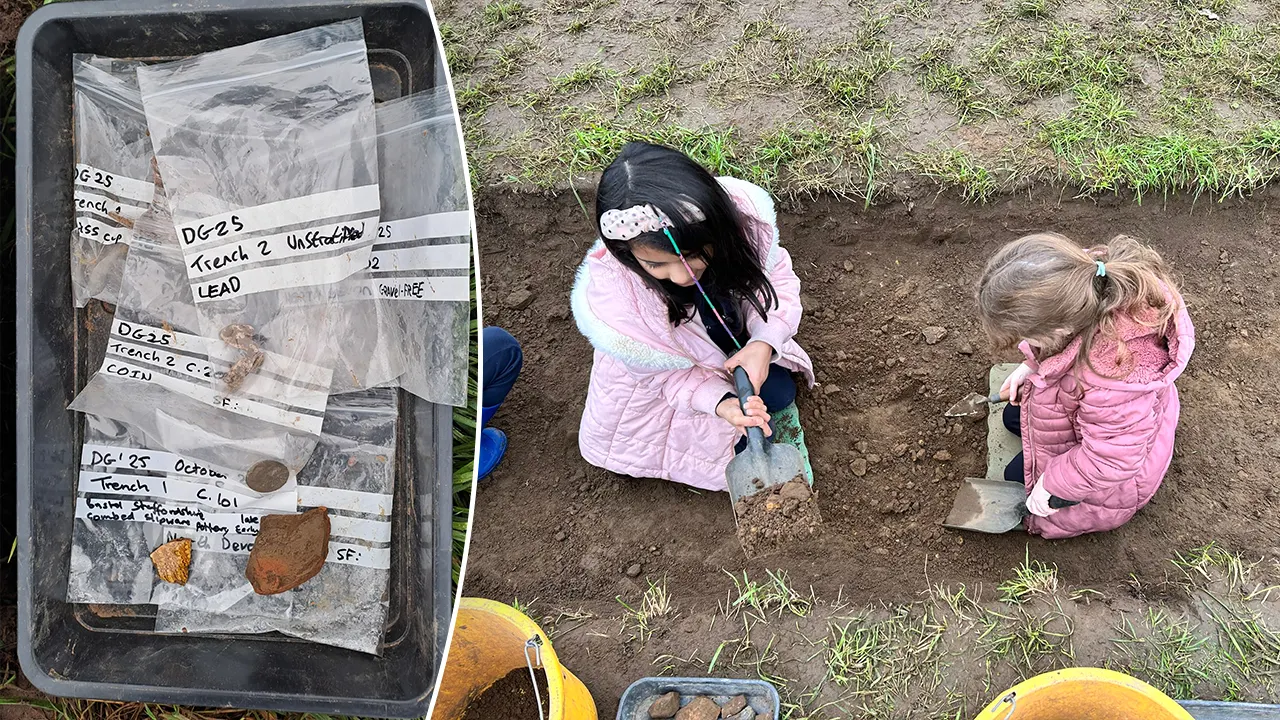
Nearly 250 schoolchildren — some from a girls’ Lego construction team — and 35 adult volunteers helped search for the once-magnificent structure that has eluded archaeologists so far.
WARRIORS FOUND STACKED IN ANCIENT WELL REVEAL VIOLENT TALE OF BATTLEFIELD DEFEAT: ARCHAEOLOGISTS
Built in the 17th century, Derrygonnelly Castle was abandoned by the 1800s. QUB professor Eileen Murphy told Fox News Digital the structure “was erased from the landscape” and largely forgotten.
During the dig, students found numerous artifacts from the 19th century, including clay pipe fragments, a possible half-penny from the Glorious Revolution and a 17th-century ditch built to protect the castle while it was being built.
Both volunteers and schoolchildren joined archaeologists in a two-week effort to uncover Derrygonnelly Castle’s long-lost traces. (Community Archaeology Programme Northern Ireland)
But the most surprising findings were the oldest. These were flint and chert tools from the Early Mesolithic era, over 9,000 years ago.
“The nature of these tells us that these hunter-gatherer people were actually living at this location and probably had a seasonal camp there,” the professor said.
CLICK HERE TO SIGN UP FOR OUR LIFESTYLE NEWSLETTER
Murphy described the finds as “hugely exciting and unexpected.”
She added, “These are the first Early Mesolithic remains to have been found in County Fermanagh to date.”
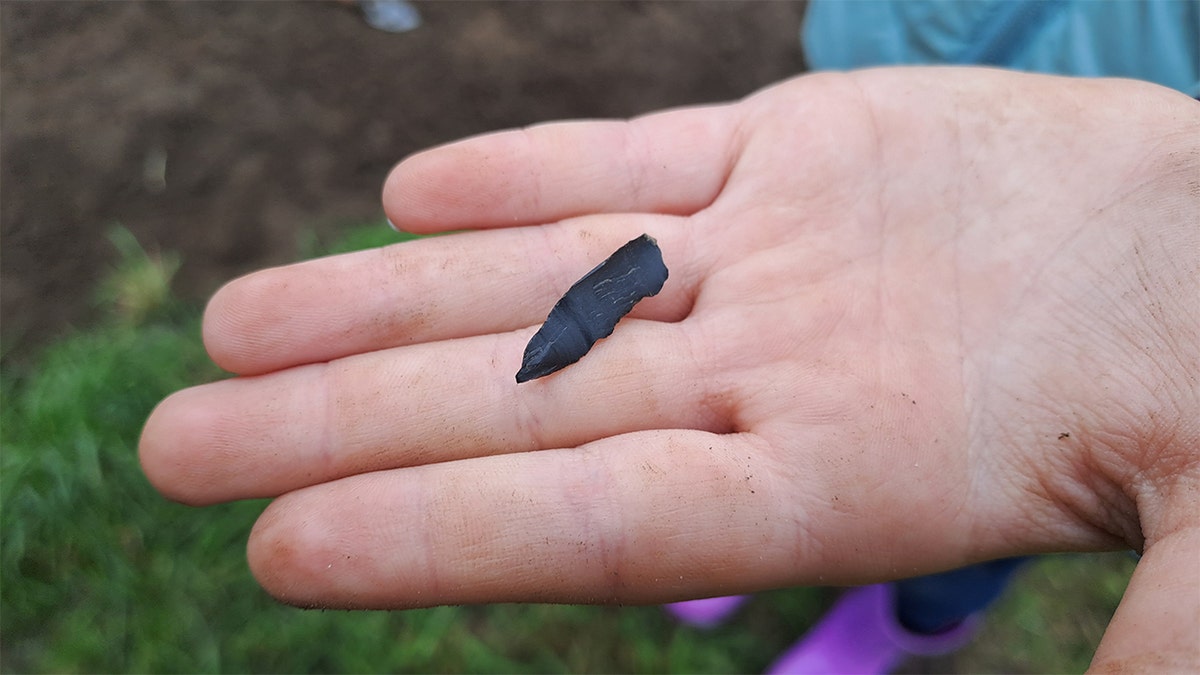
The excavation revealed flint and chert tools more than 9,000 years old, such as the one above — surprising even veteran archaeologists on site. (Community Archaeology Programme Northern Ireland)
“To add to the excitement, we also found evidence of a prehistoric round house,” she added.
“We can date this to the Early Bronze Age period, around 4,000 years ago, because we found a large fragment of diagnostic pottery at the base of one of the post-holes of the house.”
CLICK HERE FOR MORE LIFESTYLE STORIES
Given that the 17th-century artifacts appear to be high-status items — including the stem of a wine goblet and imported pottery from England — Murphy believes many of them were associated with the castle.
Historical accounts of the castle show that it had a “pretty garden,” an orchard filled with fruit trees and a grand three-story tower.
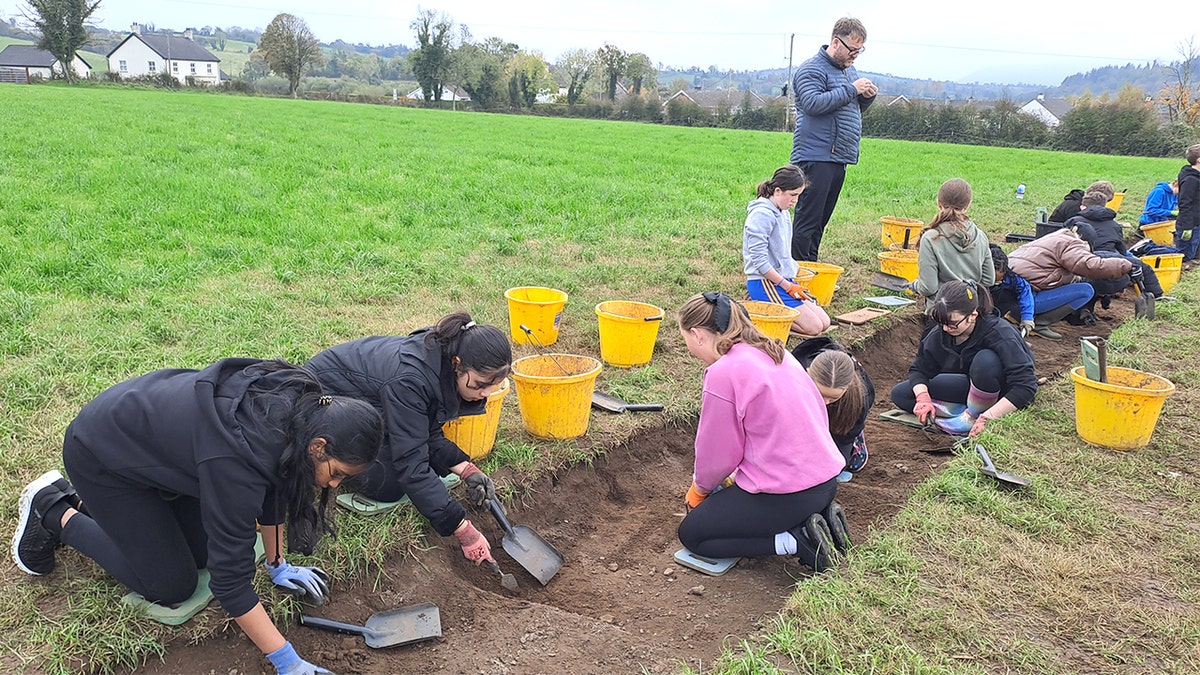
The discovery of a defensive 17th-century ditch offered fresh insight into how the original builders protected the castle. (Community Archaeology Programme Northern Ireland)
“It was fantastic that the volunteers found so many artifacts,” said Murphy.
TEST YOURSELF WITH OUR LATEST LIFESTYLE QUIZ
“This is an indication that the castle complex would have been a bustling place in its heyday, since it left so many material remains for us to discover.”
Murphy also credited the Community Archaeology Programme Northern Ireland (CAPNI), a National Lottery Heritage Fund initiative, for making the excavation possible.
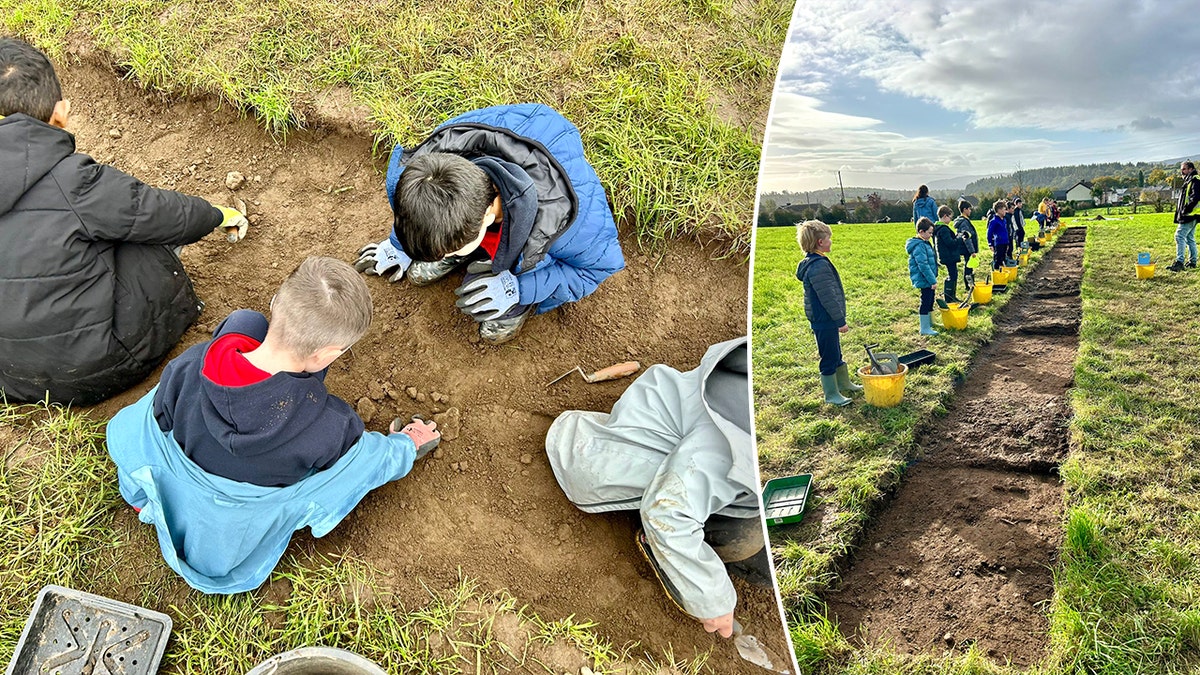
“It was fantastic that the volunteers found so many artifacts,” said a professor. (Community Archaeology Programme Northern Ireland)
“It helped give the local people a sense of pride in their landscape.”
She added that she hoped the children involved “will remember this feeling, and appreciate and care for the monuments they encounter, potentially on their own land, in the future.”
CLICK HERE TO GET THE FOX NEWS APP
“There was a great sense of camaraderie [during] the excavation, and it seems to have been a positive experience that will have enhanced the overall well-being of those involved.”
By Andrea Margolis
Source link